An extraordinary example of one of the most celebrated vintage Rolex sports watches ever produced. Dating to approximately 1968, with a 1.9 million serial number, this Rolex GMT-Master reference 1675 combines the legendary fuchsia Pepsi bezel with a beautiful Mark I “Long E” matte dial, an exceptionally well-preserved stainless steel case and a rare, period-correct C&I USA stretch-rivet bracelet.
Fully serviced and accompanied by a Rolex reference 11.002 coffin box with insert, this is a museum-quality example of a watch that has become one of the defining icons of vintage Rolex collecting.
The Fuchsia Pepsi Bezel
The centrepiece of this remarkable GMT-Master is undoubtedly its spectacular fuchsia bezel insert.
Among the numerous variations of the reference 1675, few are as visually arresting or as coveted as the fuchsia Pepsi. Associated particularly with GMT-Masters produced during the late 1960s, these inserts are celebrated for the extraordinary transformation of their original red and blue colouring over decades of natural ageing.
Rather than developing the pale pink, orange or washed-out tones seen on other vintage Pepsi inserts, certain examples evolved into an intense violet-pink or fuchsia, producing a colour combination unlike almost anything else in the Rolex catalogue.
Variations in the pigments used during manufacture, and their subsequent response to ultraviolet light and environmental exposure, are believed to have contributed to these remarkable colour changes.
The bezel on this particular watch is exceptional.
The lower half displays an extraordinarily vivid fuchsia, ranging from saturated magenta to rich purple depending on the light. Its upper section has developed a brilliant electric blue, with subtle tonal variations that give the insert an almost iridescent appearance.
The contrast is breathtaking: vibrant, unmistakably vintage and entirely unlike the more conventional red-and-blue Pepsi bezels of later production.
Crucially, the insert retains beautifully defined white numerals, circular hour markers and triangular 24-hour indicator. The typography remains clear, and the colours have developed with remarkable intensity.
It is this extraordinary combination of natural ageing, colour saturation and preservation that has made fuchsia inserts so desirable among serious collectors. No two examples age in quite the same way, and the best possess an individuality that cannot be replicated by a modern replacement.
The Mark I “Long E” Matte Dial
Behind the bezel sits an equally compelling period-correct Mark I “Long E” matte black dial.
The earliest matte-dial GMT-Masters represent an important transition in Rolex history, following the glossy gilt dials of the preceding generation. These late-1960s examples retain much of the warmth and character associated with earlier production while introducing the restrained, highly legible aesthetic that would define Rolex sports watches for decades.
The celebrated “Long E” designation refers to the distinctive typography of the Rolex signature, particularly the elongated central stroke of the letter E. It is a subtle but highly prized characteristic of early matte GMT-Master dials.
This example displays the correct period-style white printing, with the Rolex coronet and Oyster Perpetual designation above the hands, and GMT-Master, Superlative Chronometer Officially Certified below.
At the bottom of the dial is the important SWISS – T<escape><</escape>25 designation, identifying the tritium luminous material used during this period.
The dial itself is exceptionally attractive, with a deep, even matte black surface that provides the perfect backdrop to the richly aged luminous hour markers.
The tritium plots have developed a beautiful, consistent warm cream-to-custard colour. The large triangular marker at 12, rectangular markers at 6 and 9, and circular hour plots all display a wonderfully harmonious patina.
The Mercedes hands and distinctive triangular-tipped GMT hand complement the dial beautifully, their aged luminous material providing further warmth against the black surface.
Of particular interest is the red GMT hand, which introduces a subtle additional accent of colour beneath the fuchsia bezel. Its long red shaft and luminous triangular tip are among the most recognisable details of the original GMT-Master design.
The overall effect is superb: a strikingly colourful bezel surrounding a wonderfully restrained, historically significant dial, with the warmth of the aged tritium bringing the two elements together.
The Case
The stainless steel Oyster case is preserved in phenomenal condition.
Vintage Rolex sports watches are frequently encountered with heavily polished cases, softened lugs and diminished original geometry following decades of wear and repeated refinishing.
This example is remarkable for the strength of its case profile.
The lugs retain substantial proportions, clearly defined edges and the crisp, purposeful shape associated with the reference 1675. The brushed upper surfaces and polished case sides provide an excellent contrast, while the crown guards remain beautifully proportioned.
The case has tremendous presence, retaining the muscular yet elegant proportions that made the GMT-Master one of Rolex's most successful professional designs.
Dating to approximately 1968 by its 1.9 million serial number, this is a particularly desirable period of production, coinciding with some of the most celebrated dial and bezel configurations in the history of the model.
The combination of this extraordinarily sharp case and the wonderfully aged bezel and dial is especially compelling. It offers the visual character of a watch approaching sixty years old without the heavily worn appearance so frequently encountered on vintage sports Rolex models.
The Movement
Inside is the Rolex calibre 1575 automatic GMT movement, part of the celebrated calibre 15xx family.
This 26-jewel, chronometer-grade movement incorporates a 24-hour hand working in conjunction with the rotating bezel, allowing the wearer to track a second time zone alongside local time.
The calibre 1575 is renowned for its robust construction, reliability and significance in the evolution of Rolex's professional travel watches.
Importantly, this example has been fully serviced, ensuring that the mechanical heart of this remarkable vintage watch has received appropriate attention.
The Rare C&I USA Stretch-Rivet Bracelet
Completing the watch is a beautiful, period-correct Rolex C&I USA stretch-rivet Oyster bracelet.
These American-made bracelets occupy a fascinating chapter in Rolex history. Manufactured for the United States market, C&I bracelets differ from their Swiss-made counterparts in both construction and character, and are especially desirable when paired with an appropriate late-1960s sports Rolex.
The bracelet features the distinctive riveted construction and sprung expanding links associated with these early examples, giving it a wonderfully authentic vintage appearance.
This example is in phenomenal condition, with excellent overall presentation and the correct period character. It remains an especially attractive accompaniment to the sharp Oyster case.
The bracelet accommodates a wrist of approximately 19.5–20cm maximum, making it particularly wearable for a vintage rivet bracelet.
Its inclusion is a significant part of the appeal of this watch, preserving the period appearance and historical integrity of the complete piece.
The Rolex Coffin Box
The watch is accompanied by a Rolex reference 11.002 coffin box with its insert, an attractive and highly collectable presentation accessory.
The combination of this Rolex presentation box, the C&I stretch-rivet bracelet, the original Rolex components and the fully serviced calibre 1575 makes for a particularly compelling collector's package.
Historical Significance
Introduced in 1954, the Rolex GMT-Master was developed in association with Pan American World Airways to meet the needs of pilots travelling across multiple time zones.
Its defining innovation was the combination of a 24-hour hand and rotating 24-hour bezel, allowing the wearer to monitor another time zone at a glance.
The reference 1675, introduced in 1959, would go on to become one of the longest-running and most influential GMT-Master references, remaining in production until approximately 1980.
During that extraordinary production period, Rolex introduced numerous subtle variations in dial typography, luminous materials, bezel construction and bracelet design. Today, these details form an entire collecting discipline, with certain combinations commanding particular admiration.
The late-1960s fuchsia-bezel GMT-Masters sit near the pinnacle of that fascination.
They represent a moment when the natural ageing of original materials created something entirely unexpected: a watch that was already an icon of functional design transformed into one of the most colourful and recognisable vintage Rolex variants ever produced.
Specifications
Manufacturer: Rolex
Model: Oyster Perpetual GMT-Master
Reference: 1675
Serial number range: 1.9 million
Year: Approximately 1968
Case: Stainless steel Oyster case
Case diameter: Approximately 40mm including bezel
Lug to lug: Approximately 47.5mm
Thickness: Approximately 13mm
Lug width: 20mm
Dial: Mark I “Long E” matte black, tritium luminous markers
Bezel: Fuchsia Pepsi 24-hour insert
Movement: Rolex calibre 1575, automatic GMT, 26 jewels
Service history: Fully serviced
Bracelet: Period-correct Rolex C&I USA stretch-rivet Oyster
Maximum bracelet size: Approximately 19.5–20cm
Accompaniments: Rolex reference 11.002 coffin box with insert
Case dimensions are approximate reference specifications.
A Collector's GMT-Master
This 1968 reference 1675 brings together the elements that make the finest vintage Rolex watches so compelling: an exceptional fuchsia Pepsi bezel, an early Long E matte dial with beautifully even tritium patina, an extraordinarily sharp stainless steel case, a rare period-correct C&I stretch-rivet bracelet and a fully serviced calibre 1575 movement.
The 1.9 million serial number places the watch squarely within the late-1960s production period, reinforcing the historical consistency of its highly desirable dial and bezel configuration.
Accompanied by its Rolex 11.002 coffin box and insert, it is a magnificent example of the golden age of Rolex professional watchmaking.
An exceptional, museum-quality GMT-Master, with extraordinary colour, remarkable preservation and the sort of period character that places it among the most desirable configurations of the reference 1675.

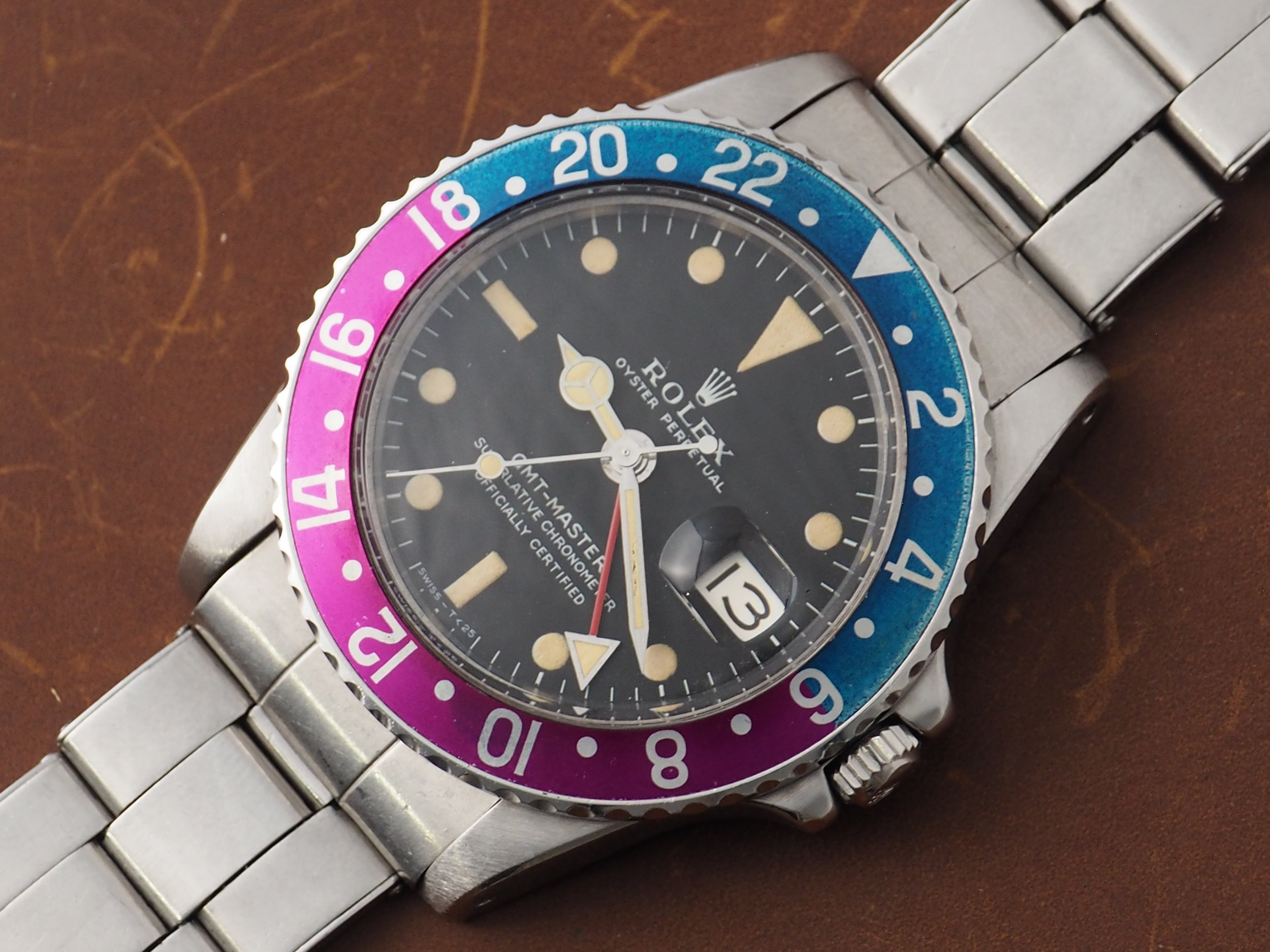 Image 1 of 24
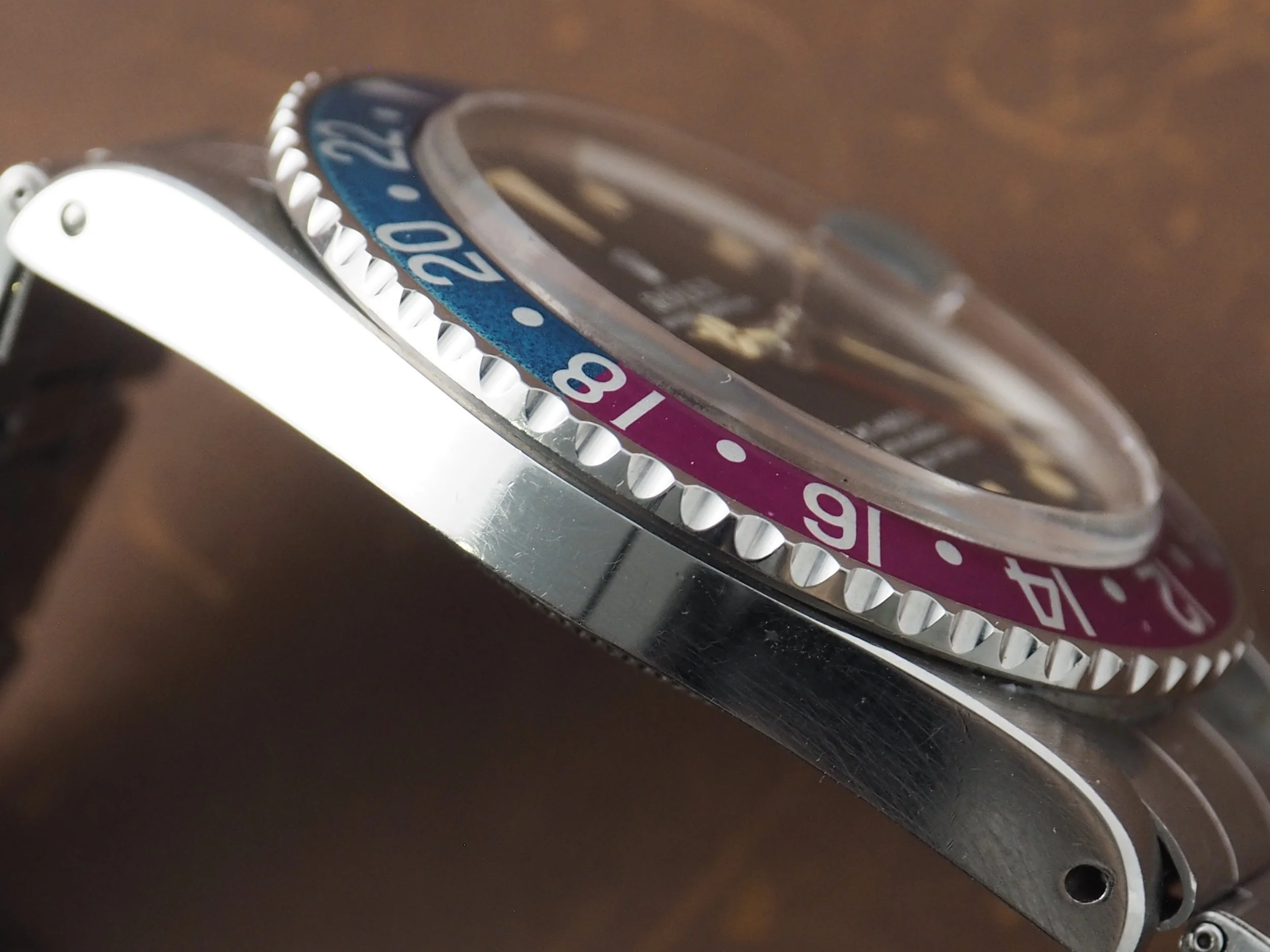 Image 2 of 24
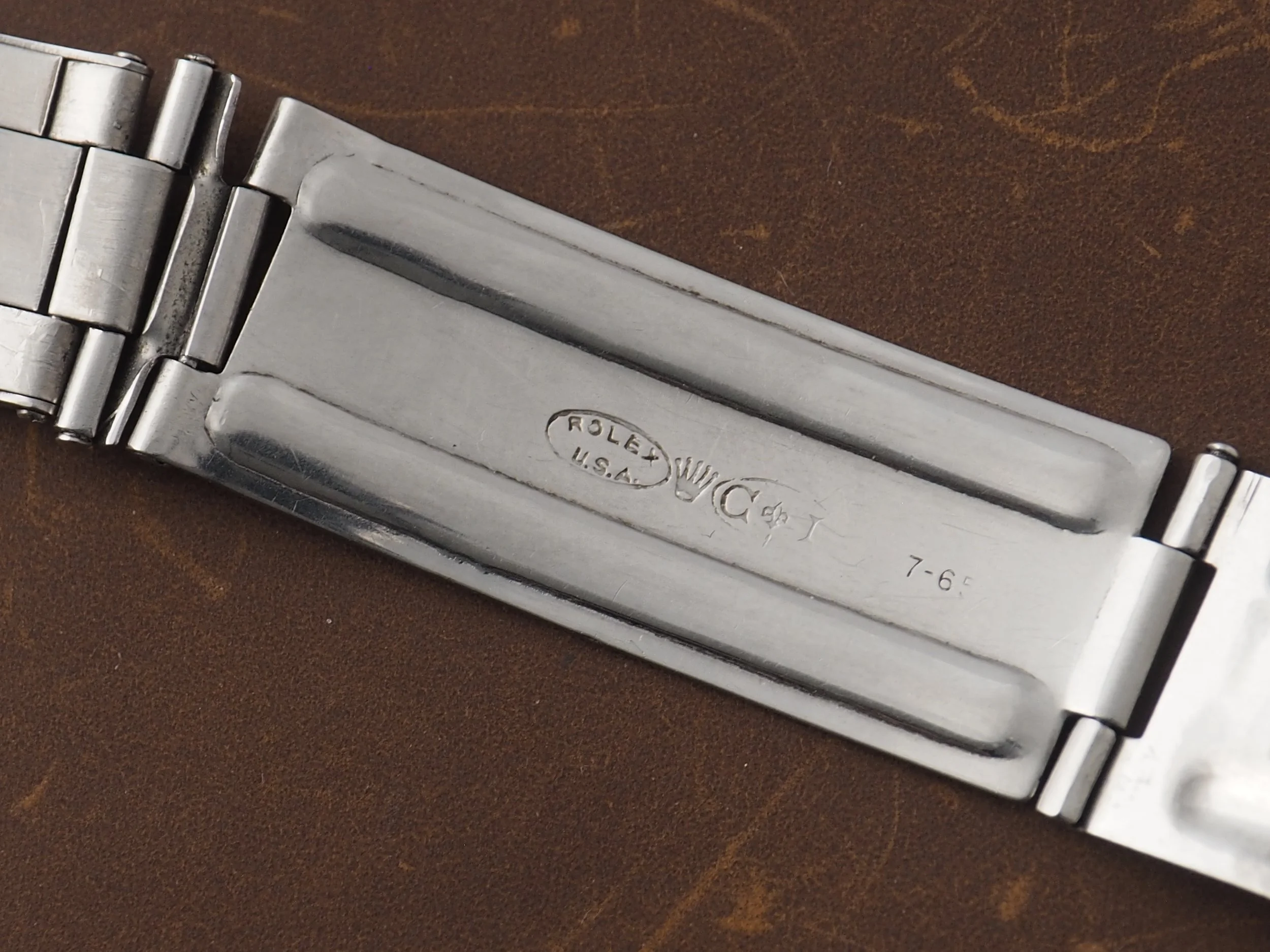 Image 3 of 24
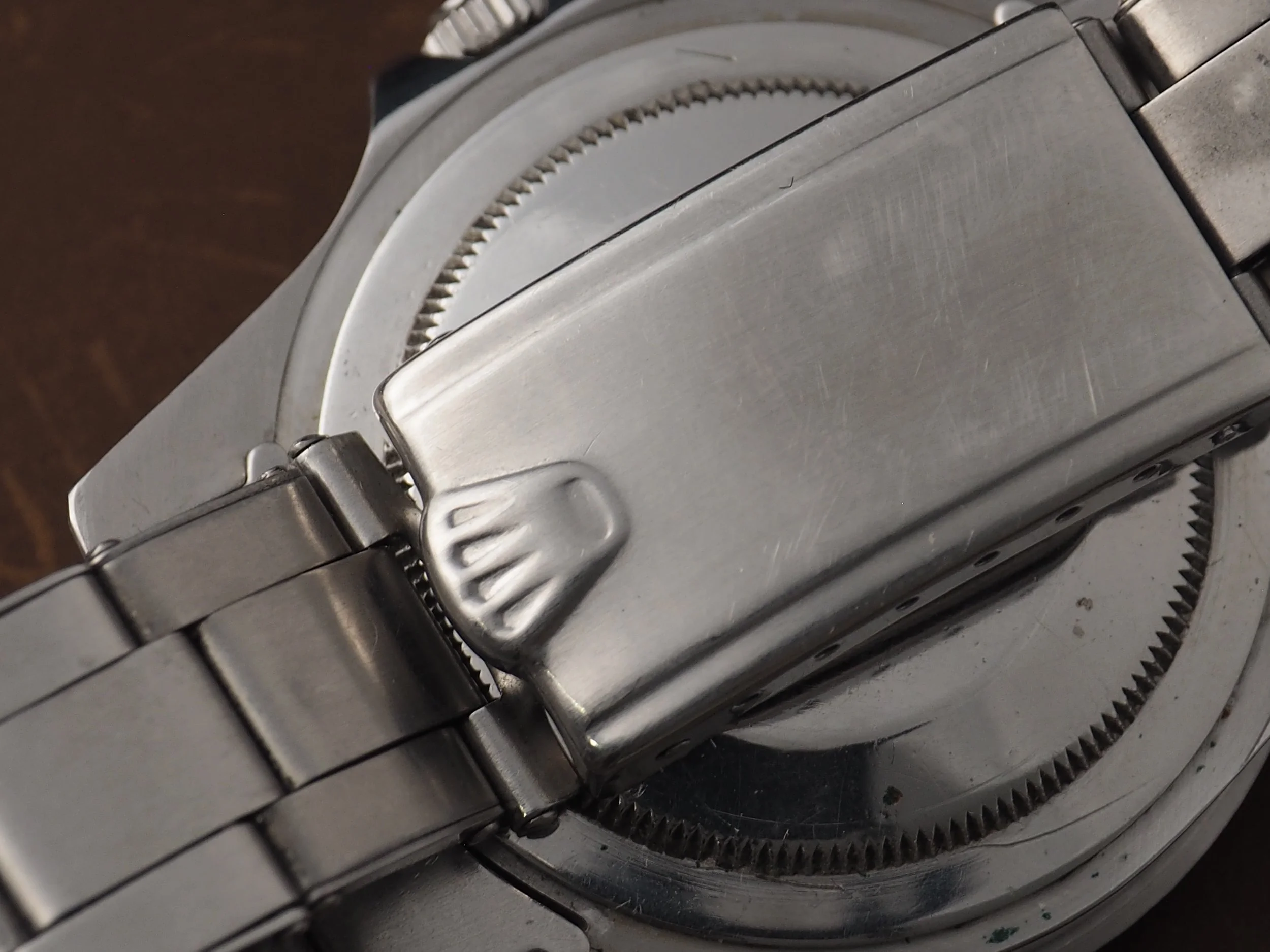 Image 4 of 24
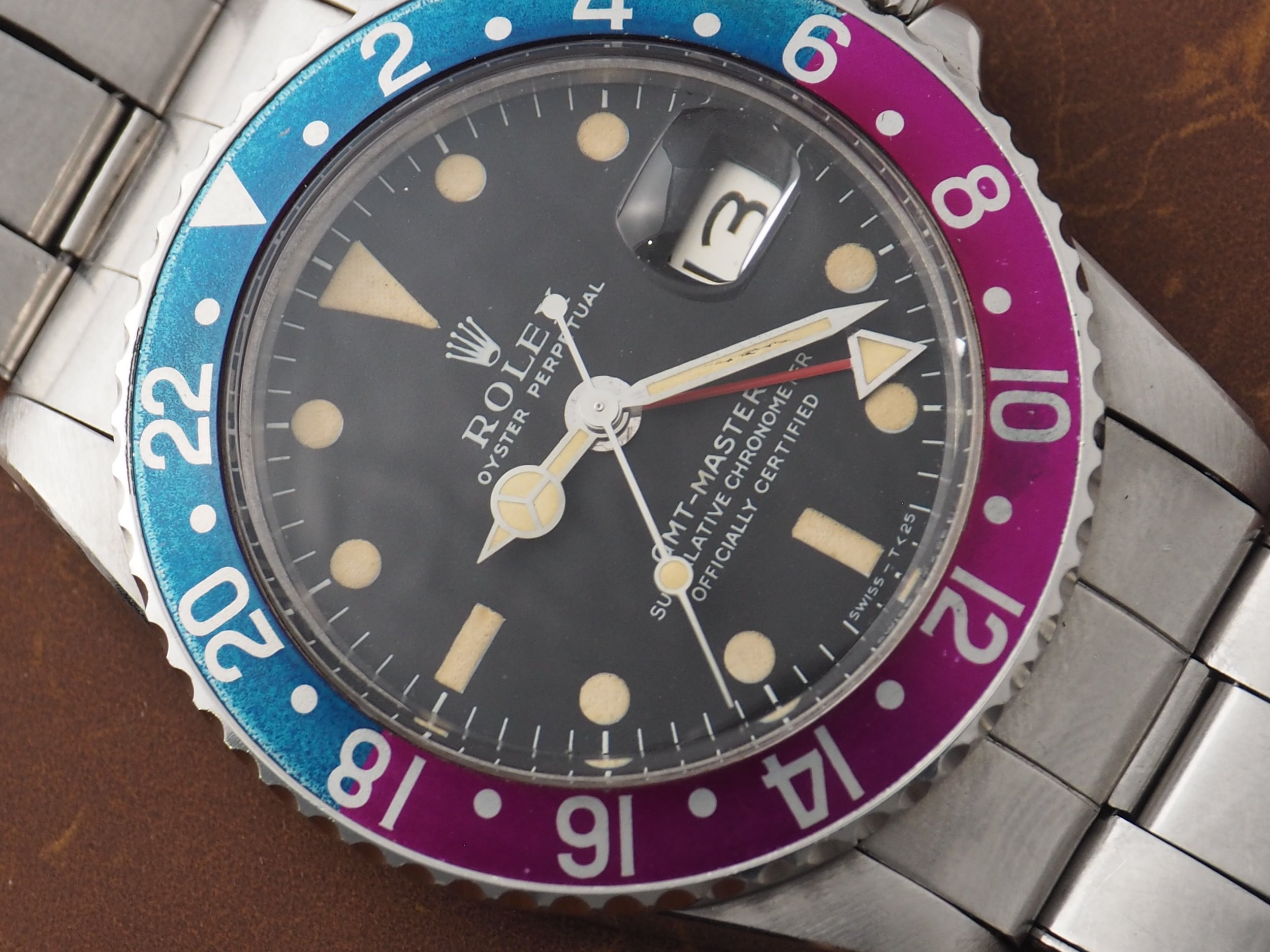 Image 5 of 24
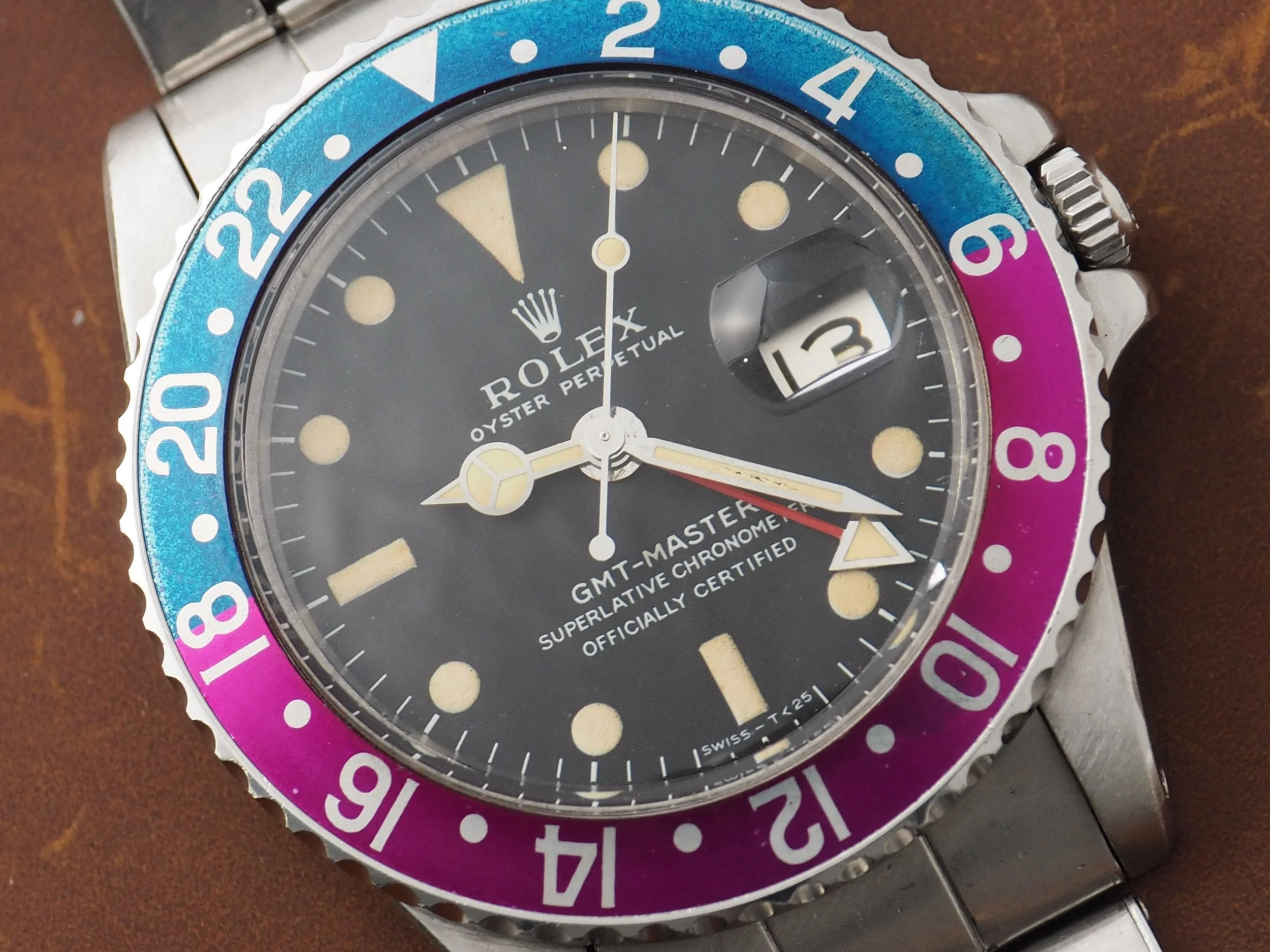 Image 6 of 24
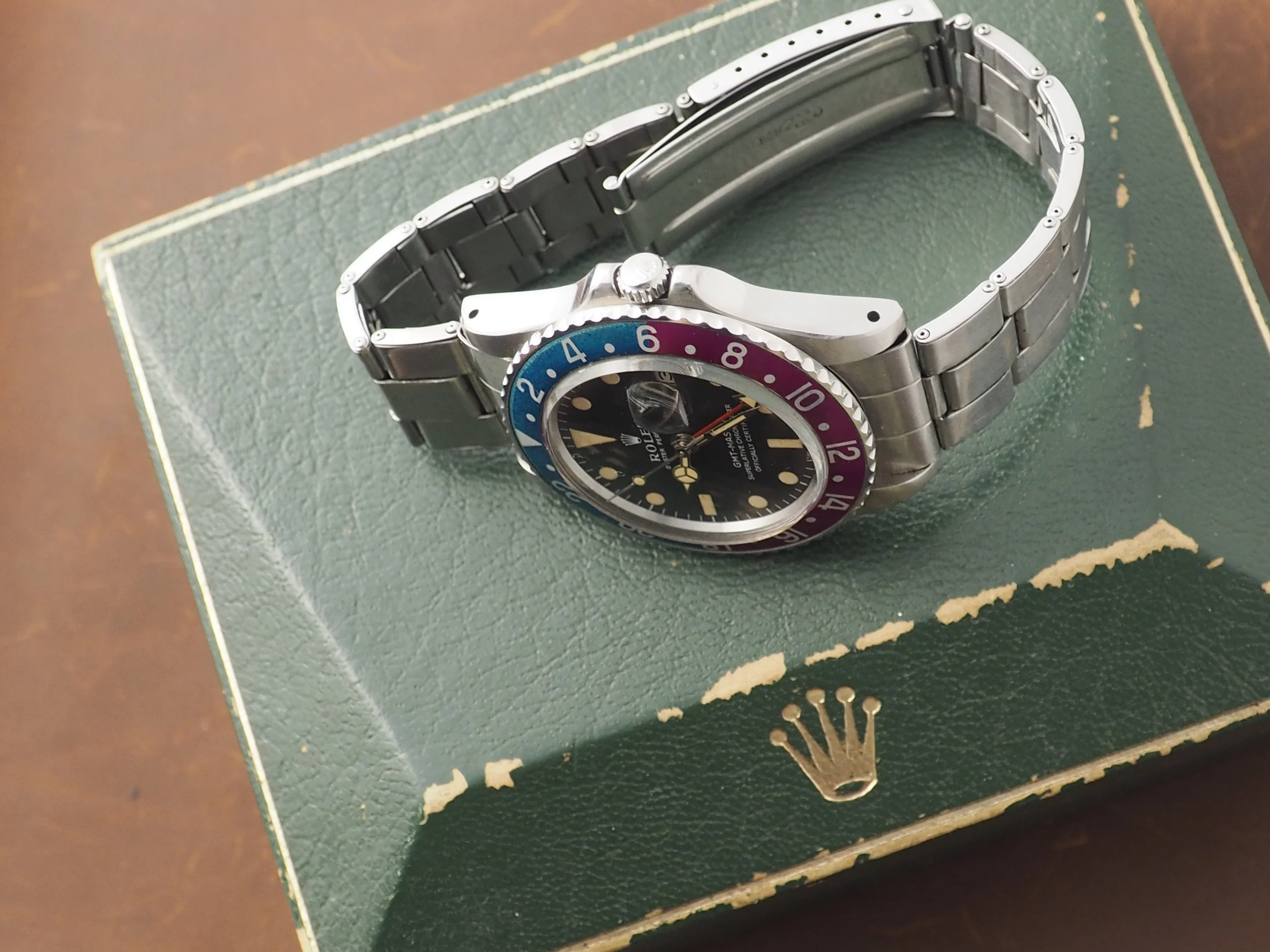 Image 7 of 24
 Image 8 of 24
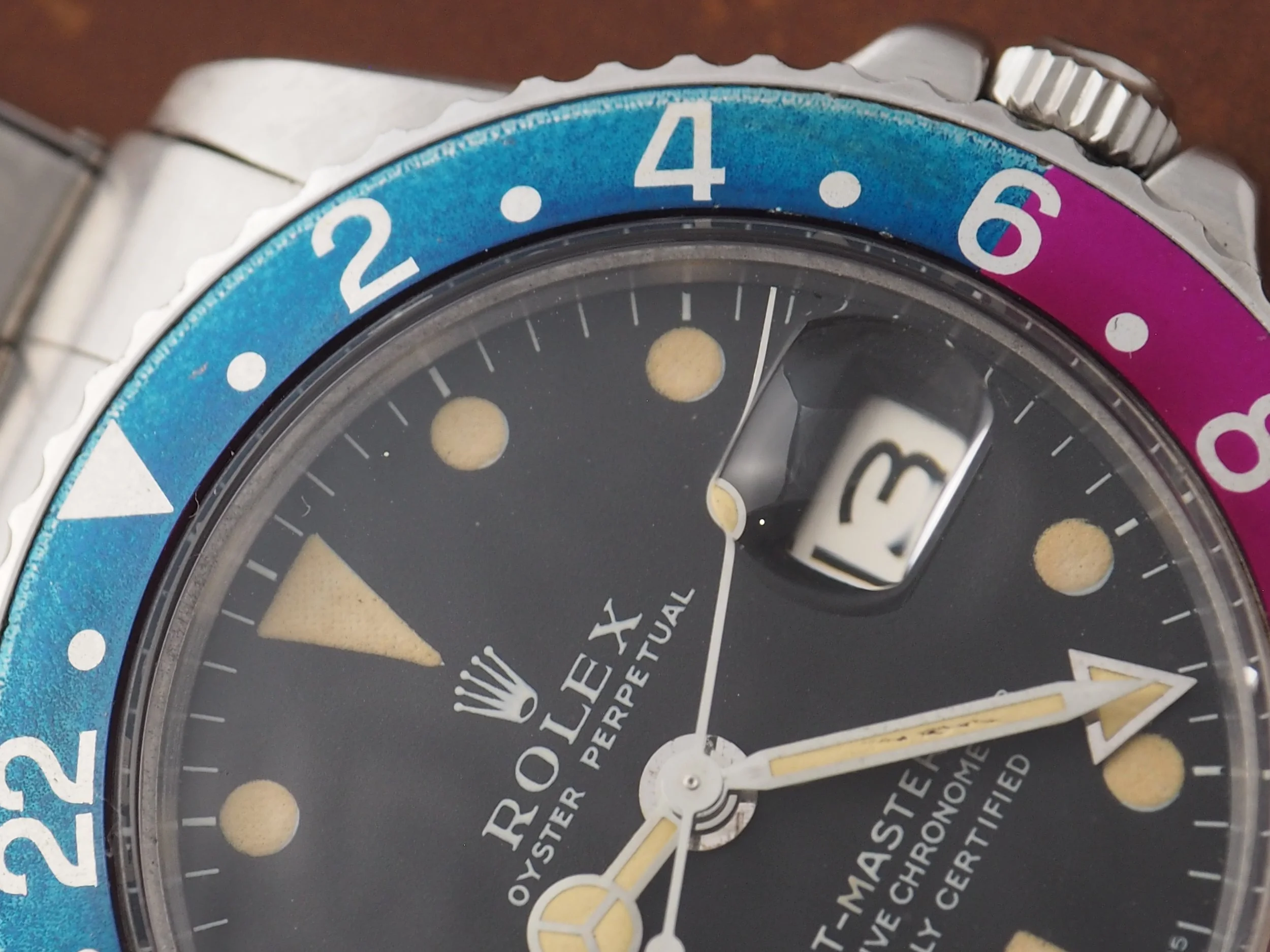 Image 9 of 24
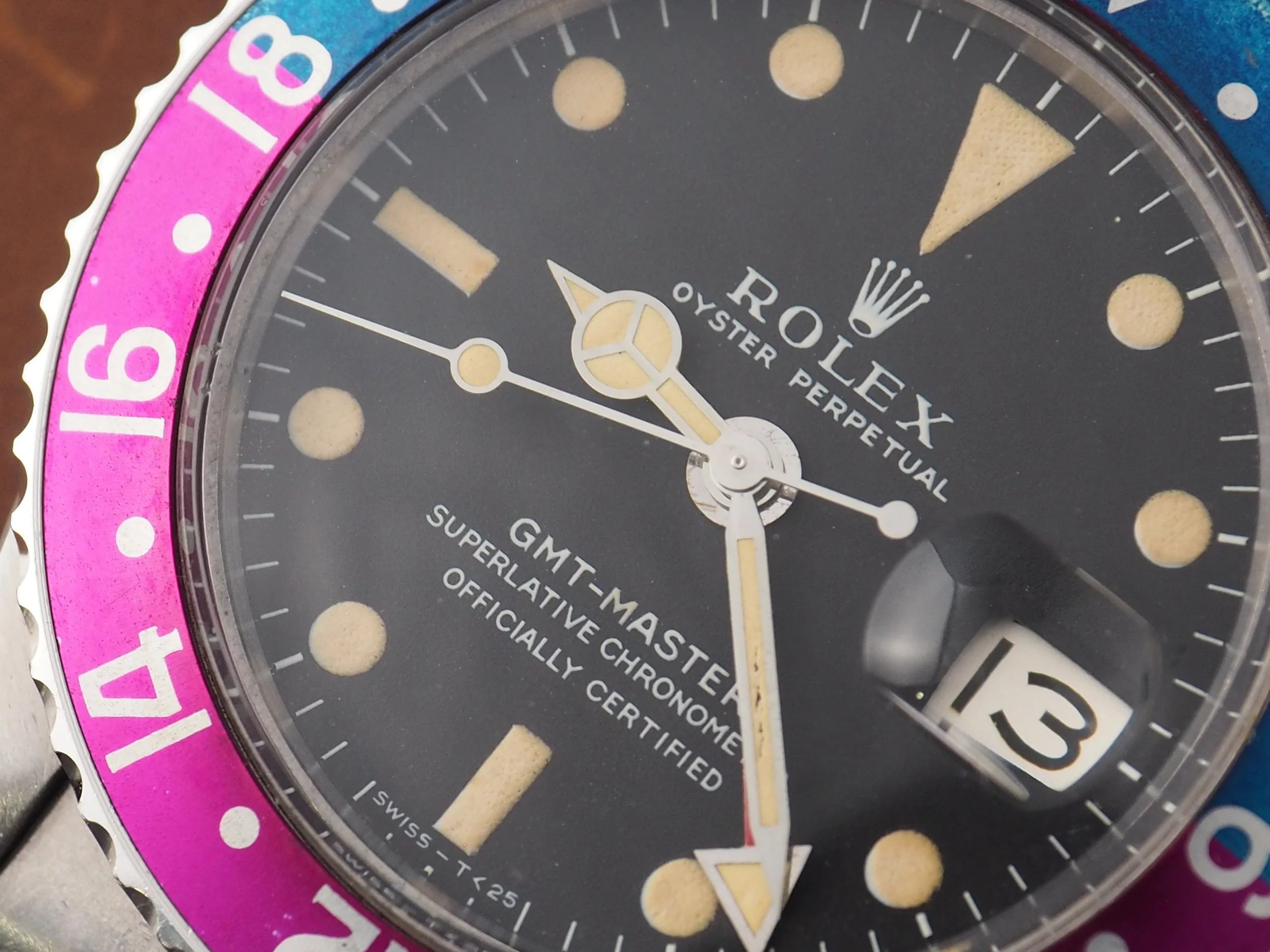 Image 10 of 24
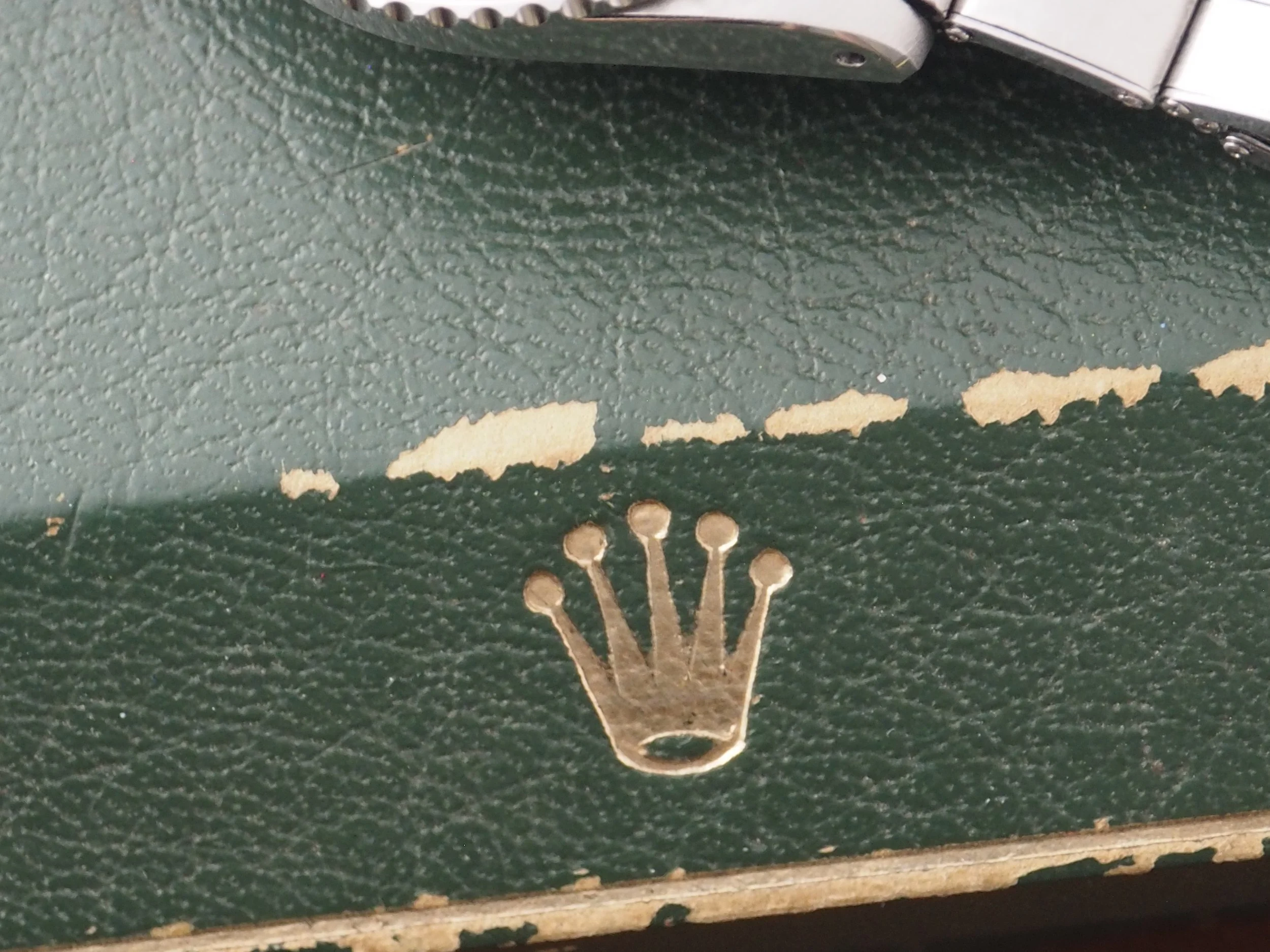 Image 11 of 24
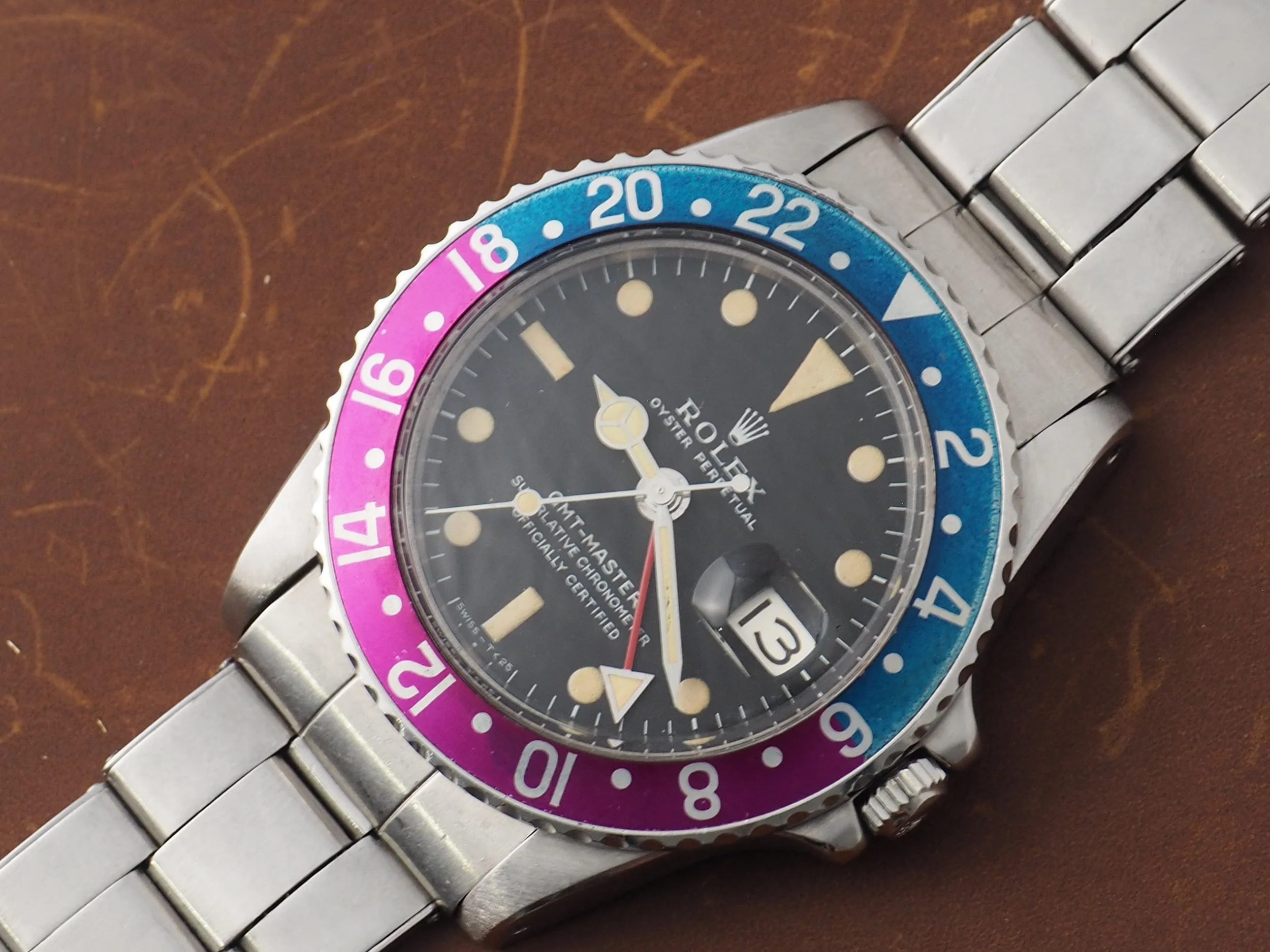 Image 12 of 24
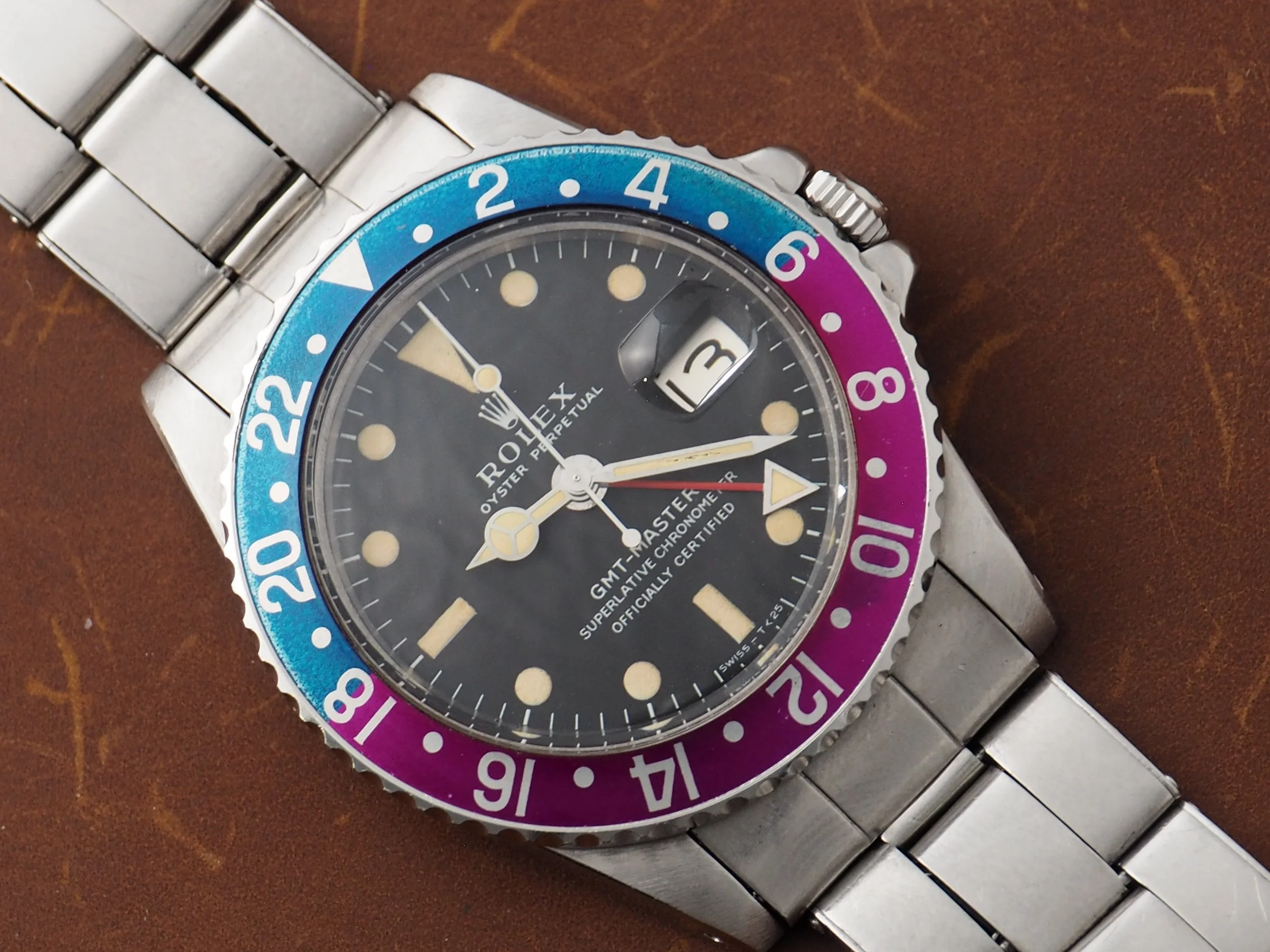 Image 13 of 24
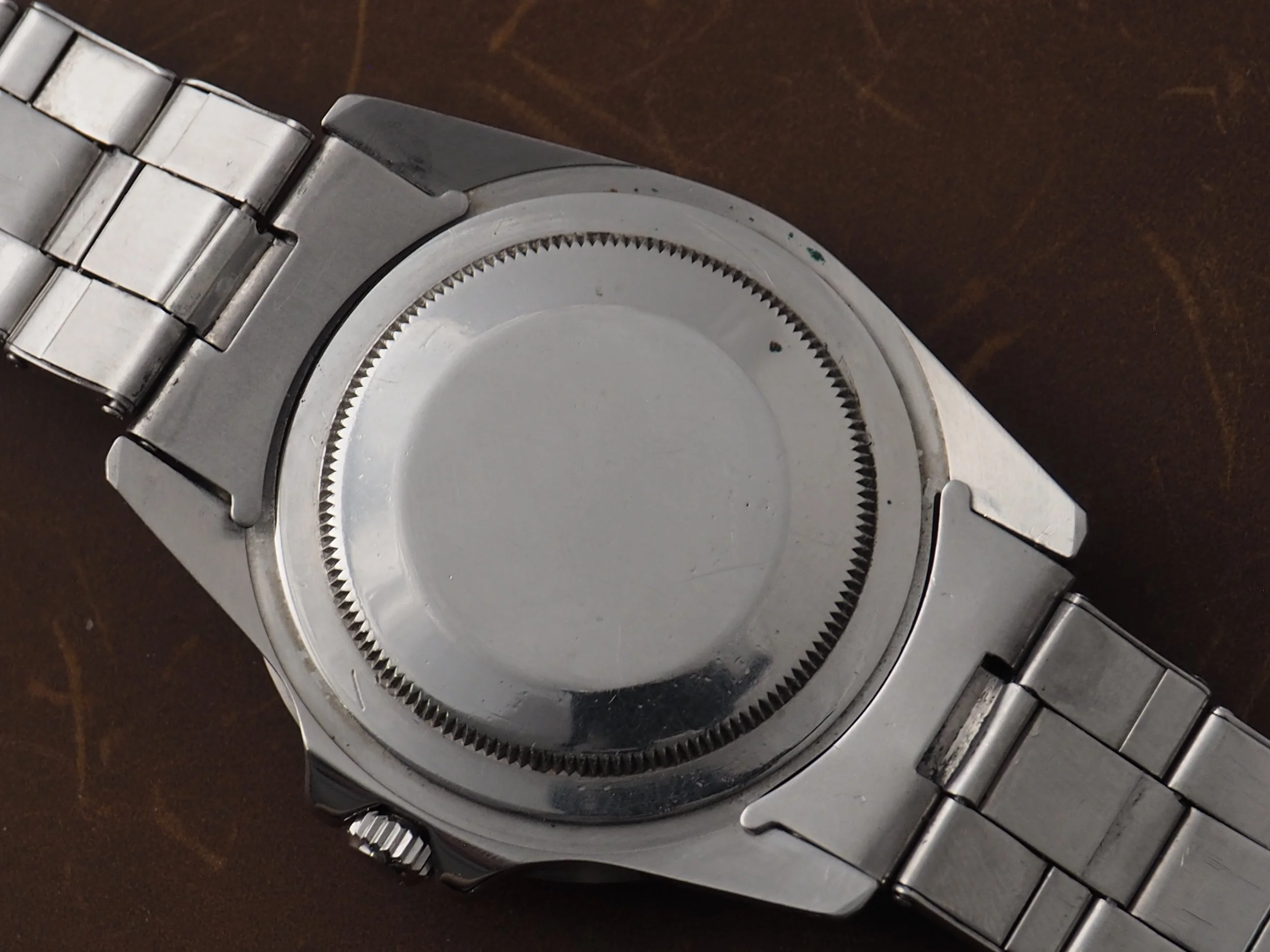 Image 14 of 24
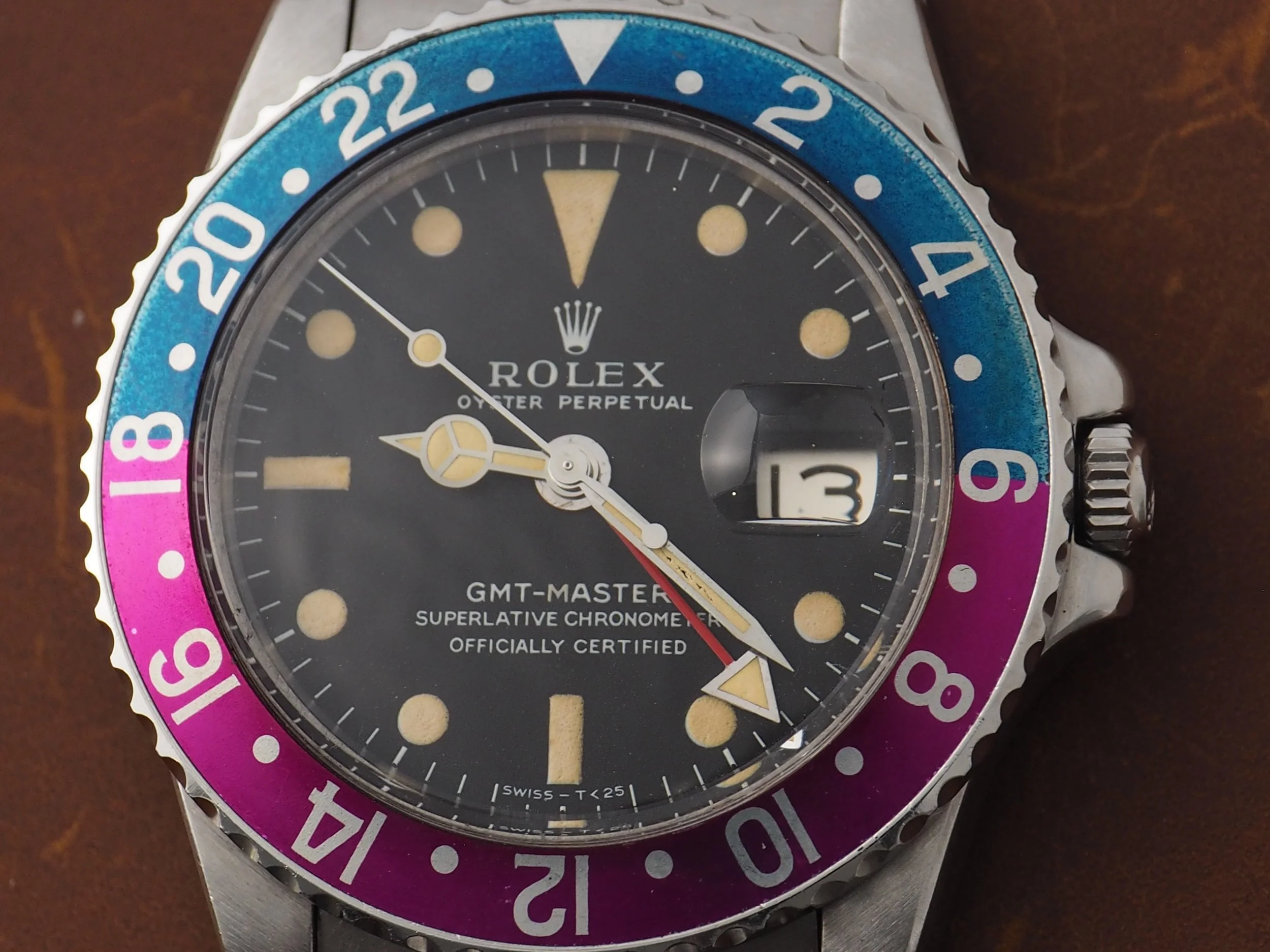 Image 15 of 24
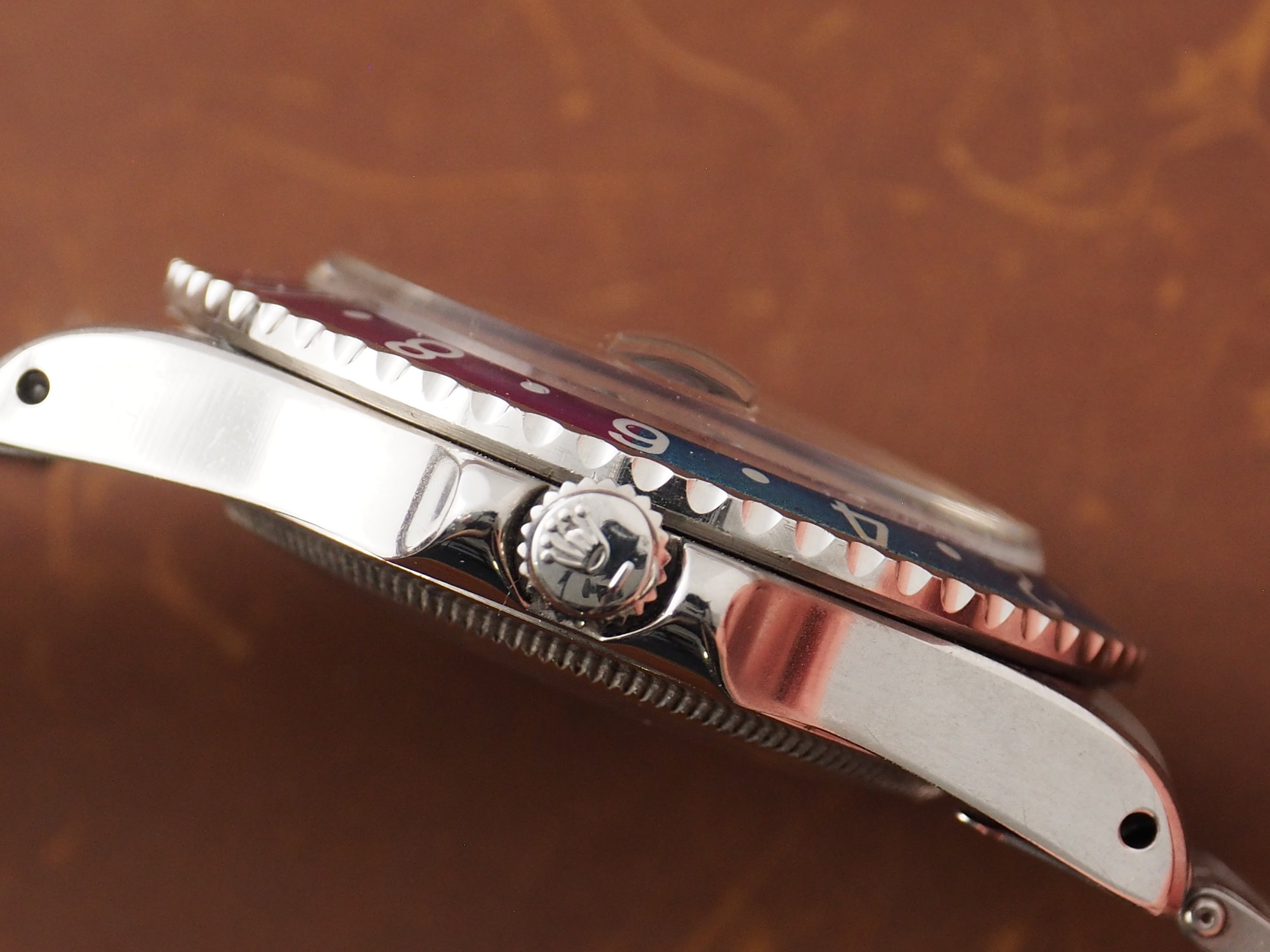 Image 16 of 24
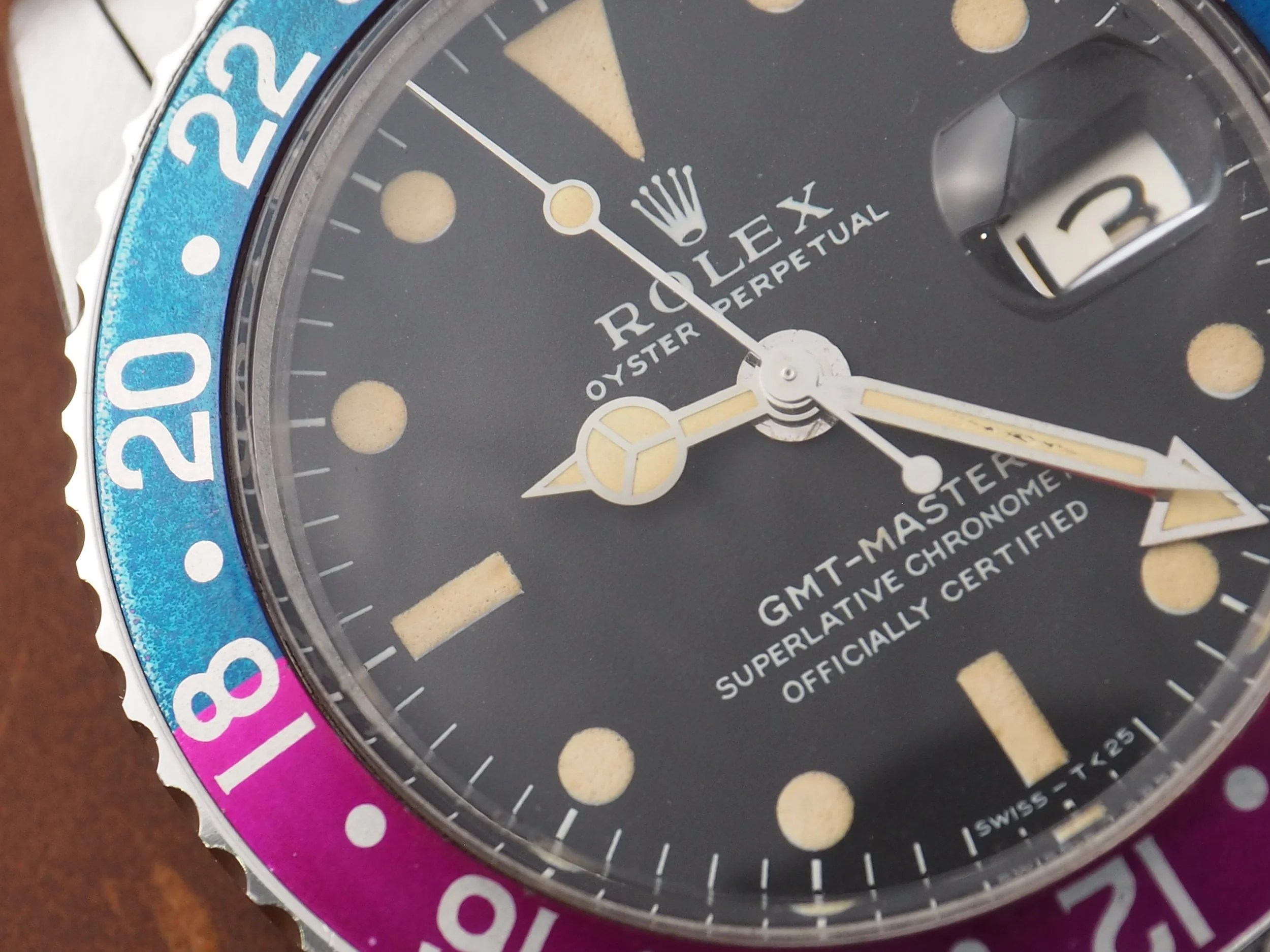 Image 17 of 24
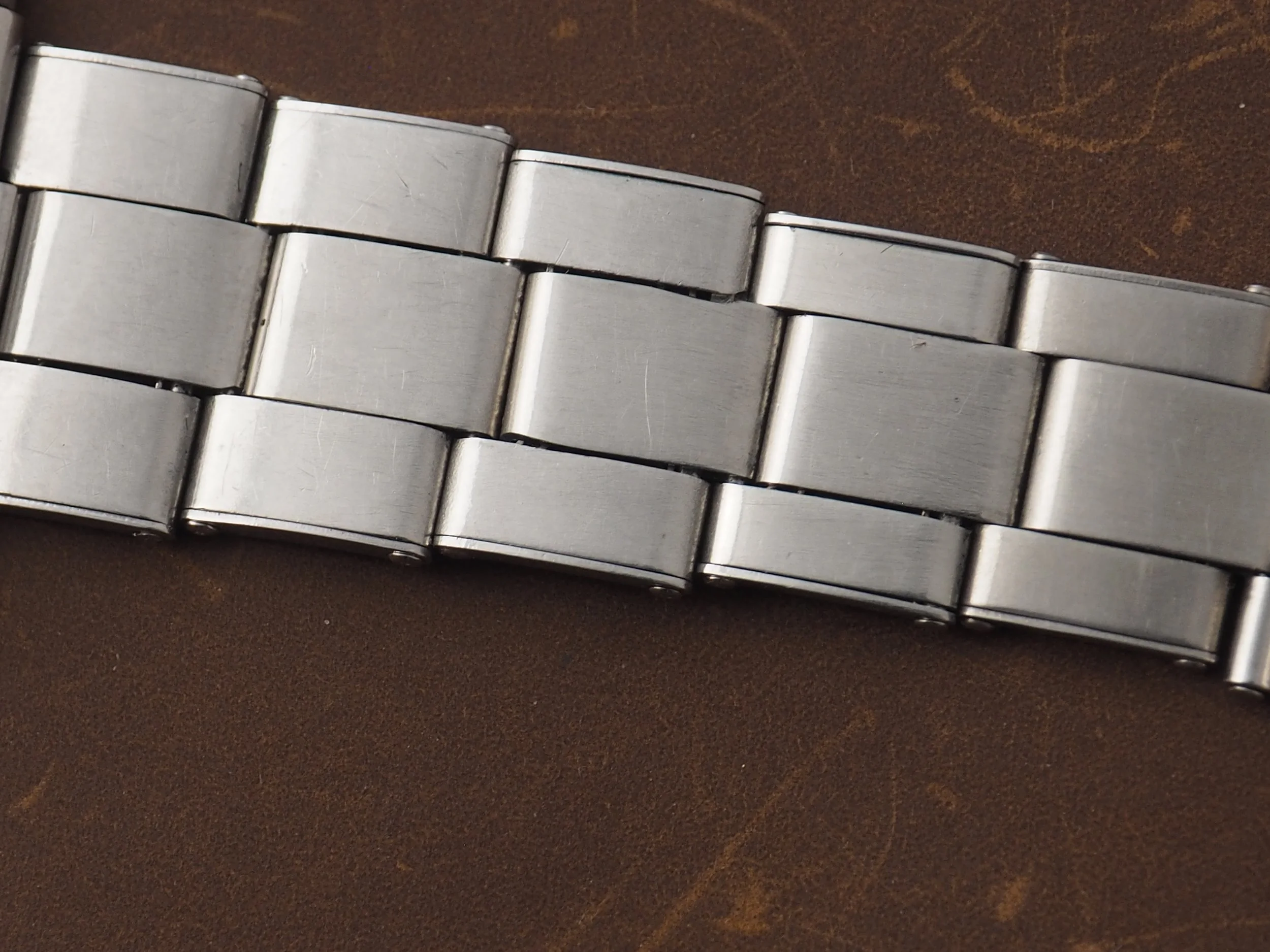 Image 18 of 24
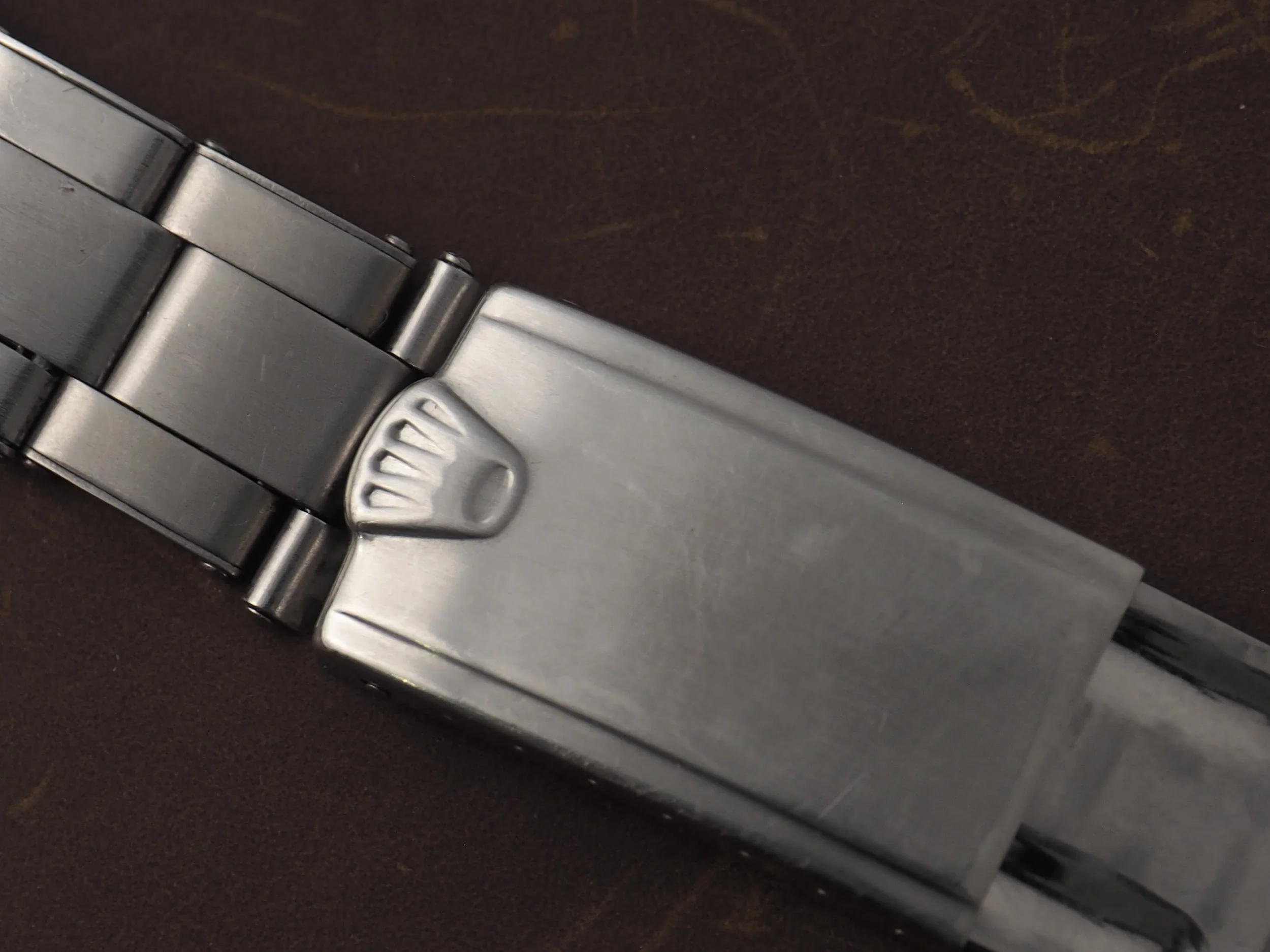 Image 19 of 24
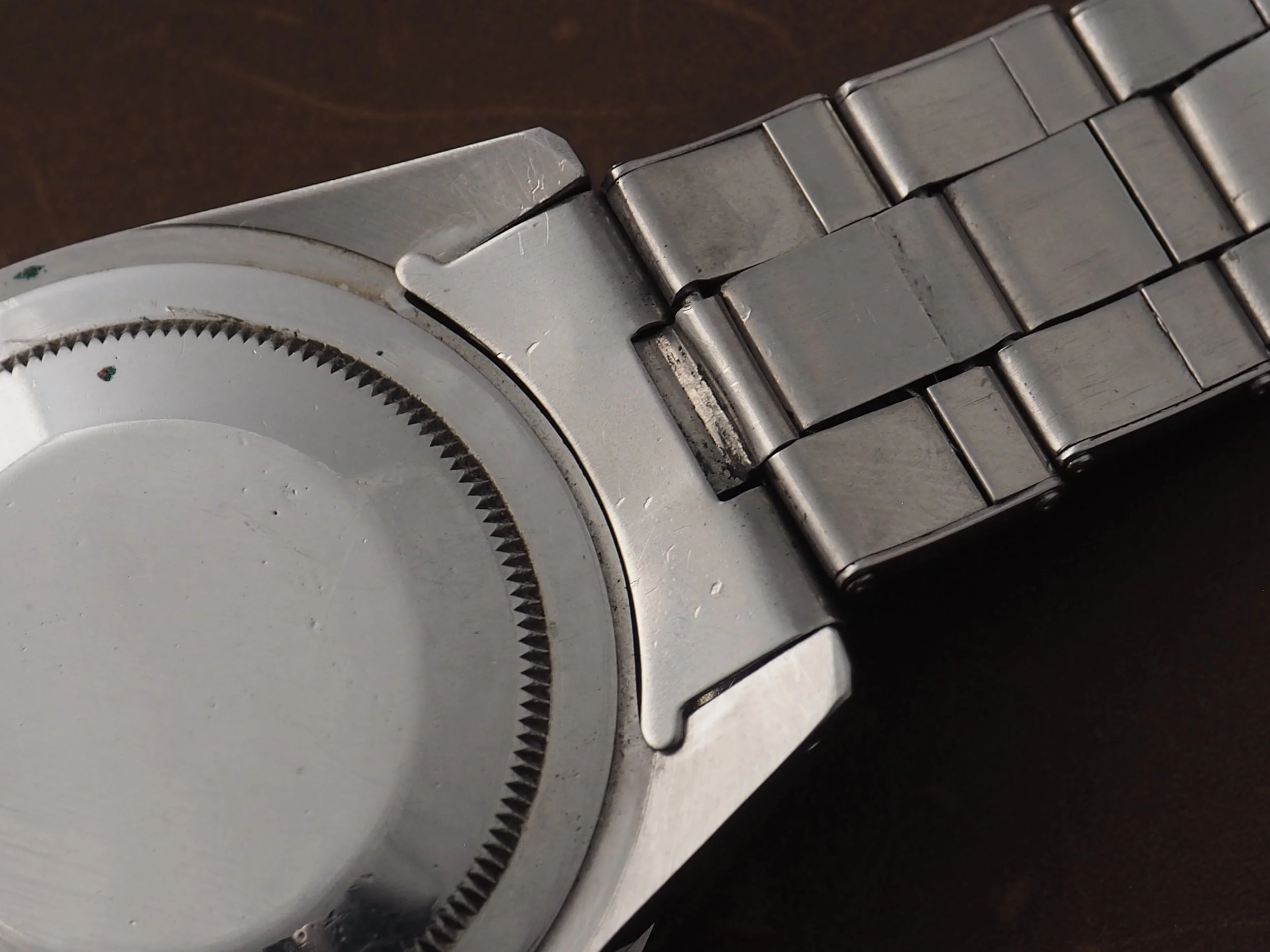 Image 20 of 24
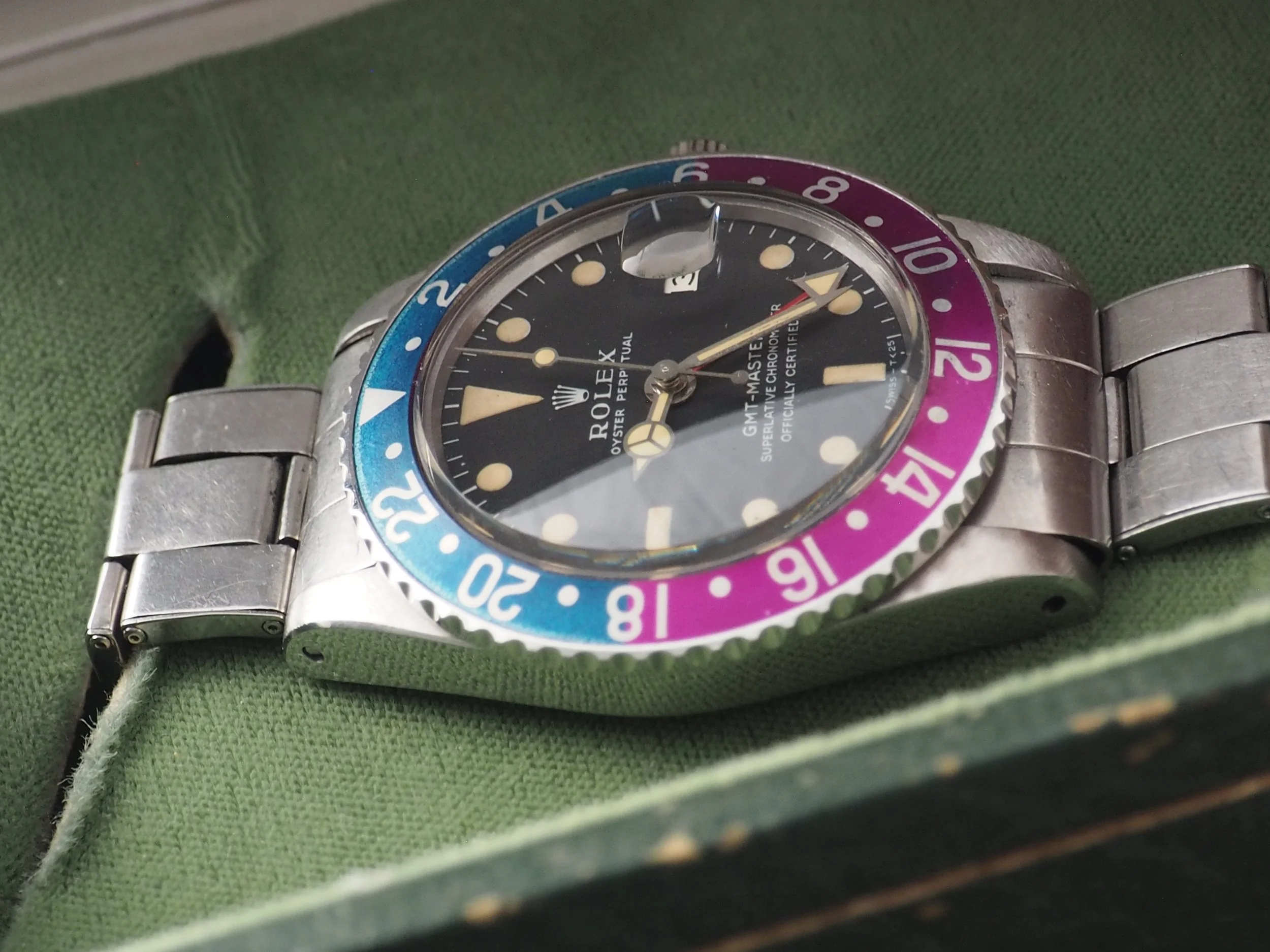 Image 21 of 24
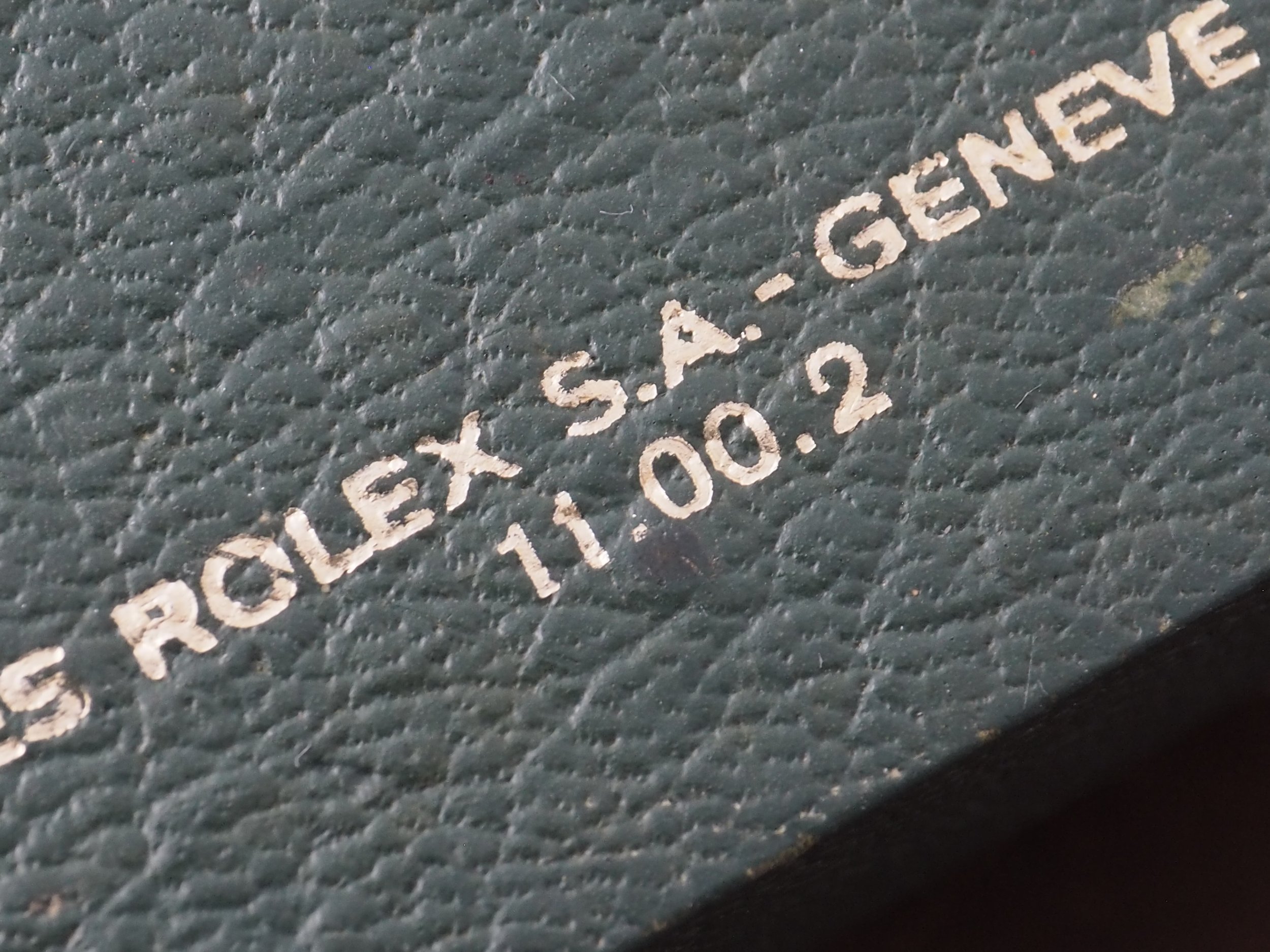 Image 22 of 24
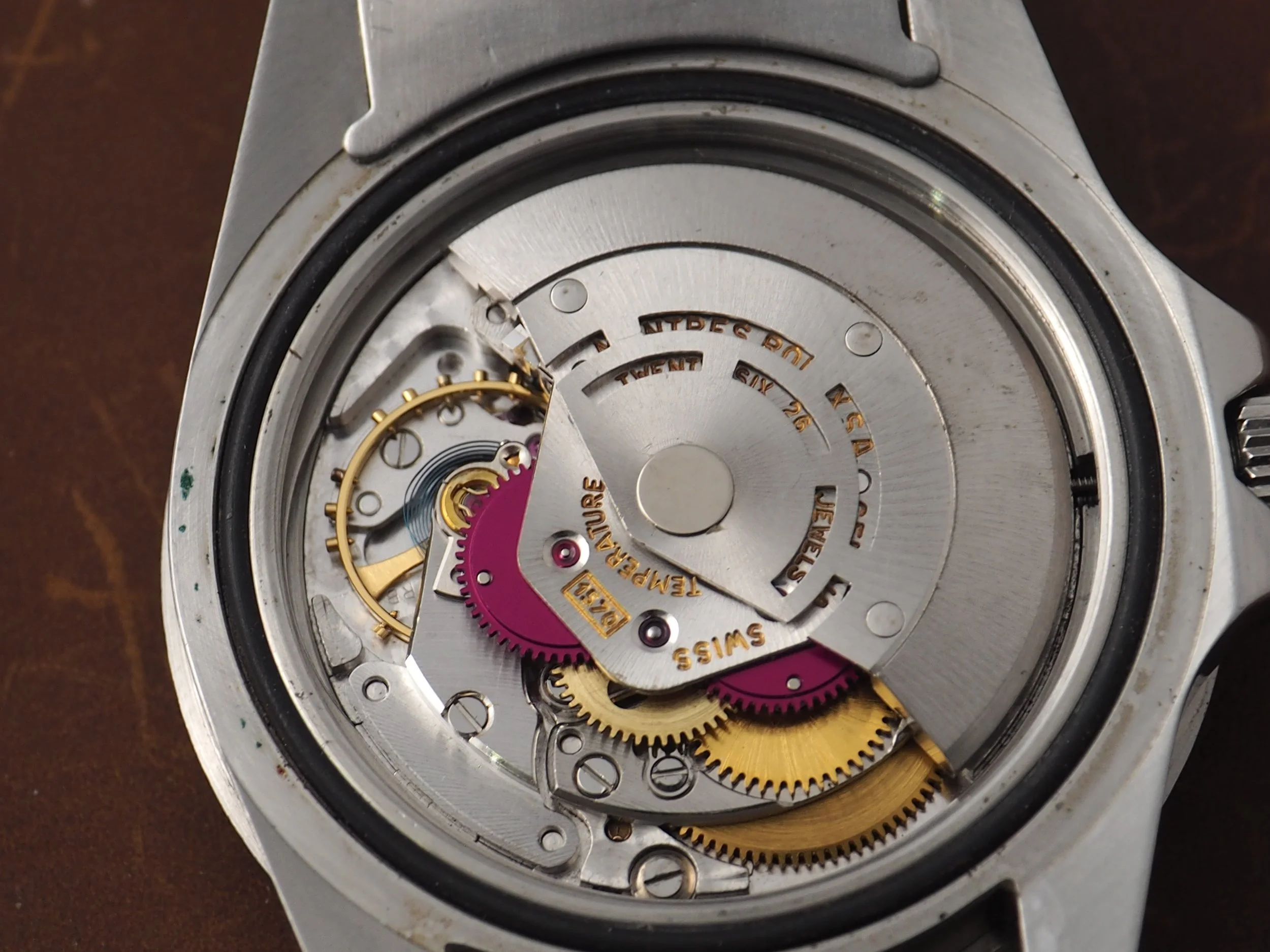 Image 23 of 24
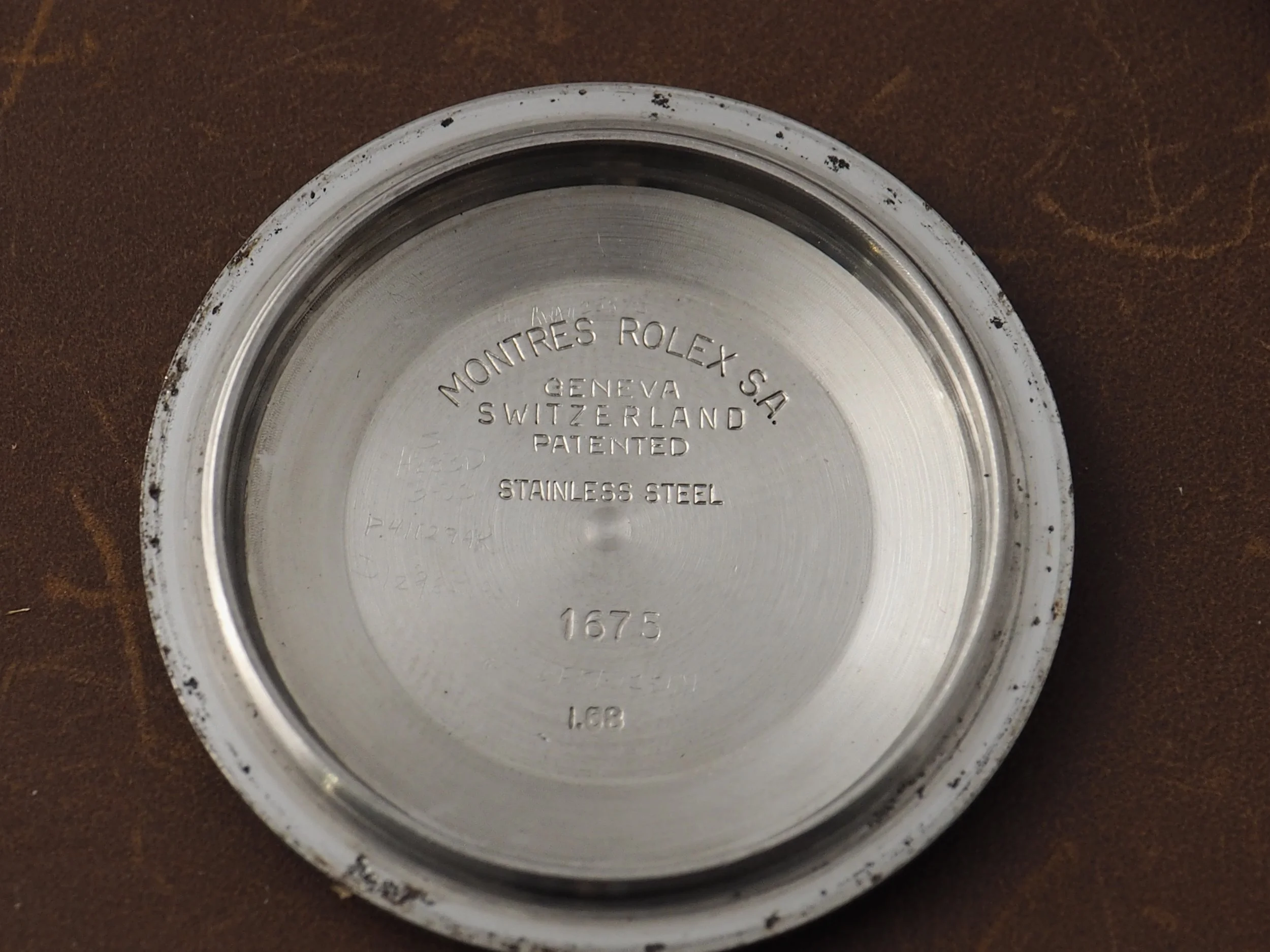 Image 24 of 24