An exceptional example of the Omega Seamaster Chronograph reference 105.005-65, dating to approximately 1966 and housing one of the most important chronograph movements in Swiss watchmaking history: the legendary Omega calibre 321.
Presented in beautiful, honest vintage condition, this watch combines an outstanding silver triple-register dial, a sharp stainless steel case and a period-correct Omega beads-of-rice bracelet. A wonderfully preserved example of Omega's mid-century chronograph design, offering the same celebrated mechanical architecture as the earliest Speedmasters in a considerably more understated package.
The Dial
The dial is quite simply magnificent.
Finished in a warm silver tone, it features a beautifully balanced three-register arrangement, with recessed subsidiary dials at 3, 6 and 9 o'clock. Each register is decorated with fine concentric circular engraving, providing a subtle contrast against the smooth main dial surface.
The applied silver baton hour markers, slender hands and restrained Omega signature give the watch an elegance rarely encountered in modern chronographs.
The Omega logo and beautifully flowing Seamaster script sit beneath 12 o'clock, while a finely printed tachymetre scale runs around the outer circumference of the dial.
The three subsidiary registers provide a 30-minute chronograph counter, 12-hour chronograph counter and continuous running seconds, making this a fully fledged mechanical chronograph rather than a simple two-register design.
The dial has aged exceptionally attractively, retaining its original character with light marks and subtle patination accumulated over six decades. The printing remains beautifully legible, the subsidiary registers are particularly crisp, and the overall presentation is outstanding.
There is something especially appealing about the simplicity of these early Seamaster chronographs. Without the external tachymeter bezel of the Speedmaster, the dial takes centre stage, and the delicate combination of applied markers, recessed registers and fine printing is allowed to shine.
The Case
The stainless steel case is preserved in sharp, honest condition, retaining the beautifully proportioned lugs and traditional round chronograph profile characteristic of the reference 105.005.
The case features a polished bezel, substantial lugs and the classic arrangement of two rectangular chronograph pushers flanking the winding crown.
There are a few small dings and surface marks to the case, entirely consistent with its age, but the overall condition is particularly attractive. Importantly, the watch has not lost the strong, purposeful proportions that give these early Omega chronographs their character.
Measuring approximately 38mm including the crown, with a compact 41mm lug-to-lug measurement, it offers excellent vintage proportions.
The relatively restrained case size makes this an exceptionally elegant chronograph, combining considerable mechanical complexity with the dimensions of a traditional mid-century dress watch.
The Legendary Calibre 321
At the heart of this watch is the extraordinary Omega calibre 321, a manually wound, 17-jewel, column-wheel chronograph movement.
Developed from the celebrated Lemania chronograph architecture, the calibre 321 is widely regarded as one of the finest chronograph movements of the twentieth century.
Its importance in watchmaking history is difficult to overstate.
The calibre 321 powered the very first Omega Speedmaster in 1957 and continued to be used in the Speedmaster Professional throughout the 1960s. Most famously, it was the movement inside the Speedmasters worn during NASA's Apollo programme, including the watches taken to the lunar surface in July 1969.
The same fundamental movement architecture that helped make the Speedmaster the first watch worn on the Moon is found inside this beautifully understated Seamaster.
Unlike the cam-operated chronograph movements that became increasingly common during the late 1960s and 1970s, the calibre 321 employs a traditional column-wheel mechanism to coordinate the chronograph functions.
This sophisticated construction is admired for its mechanical refinement, intricate engineering and historical significance.
The movement also features a horizontal clutch, a screwed balance and a traditional operating frequency of 18,000 vibrations per hour.
Omega eventually replaced the calibre 321 in its mainstream chronograph production with the calibre 861, making these earlier column-wheel examples especially significant to collectors.
Indeed, such is the calibre's reputation that Omega reintroduced the 321 in modern production decades later, painstakingly recreating its original architecture for selected high-end Speedmaster models.
The movement serial number dates this particular Seamaster to approximately 1966, placing it firmly within the golden age of Omega's mechanical chronograph production.
For collectors who appreciate the engineering of the early Speedmaster but prefer a more discreet, classically styled watch, the Seamaster 105.005 represents a particularly compelling alternative.
The Omega Beads-of-Rice Bracelet
Completing the watch is a beautiful, period-correct Omega stainless steel beads-of-rice bracelet.
These bracelets are among the most recognisable and desirable Omega bracelet designs of the 1950s and 1960s, characterised by their distinctive rows of small, rounded polished links.
The intricate construction gives the bracelet a remarkably fluid appearance, providing a beautiful contrast against the more angular design of the case and chronograph pushers.
It is an especially appropriate pairing for this reference, giving the watch the complete period appearance that collectors appreciate.
The bracelet is in attractive vintage condition and accommodates a wrist of approximately 19cm.
Its inclusion is a considerable part of the appeal of this example, preserving the elegant sporting character of Omega's early Seamaster chronographs.
Historical Significance
The Omega Seamaster collection was introduced in 1948 to celebrate the manufacturer's centenary and quickly became one of the company's most successful watch families.
Although the Seamaster name is now closely associated with diving watches, its early history encompassed a much broader range of robust yet elegant wristwatches, including some exceptionally sophisticated chronographs.
The reference 105.005 belongs to this fascinating period.
Produced during the mid-1960s, it represents a time when Omega was at the forefront of Swiss chronograph development, supplying professional timing instruments, precision mechanical watches and increasingly advanced sports chronographs.
While the Speedmaster became internationally famous through its association with NASA, the Seamaster chronographs offered much of the same mechanical excellence in a more refined and traditional format.
Today, these early calibre 321 Seamasters are appreciated for precisely that combination: exceptional mechanical pedigree, elegant proportions and historical importance without the overt sporting character of their Speedmaster counterparts.
Specifications
Manufacturer: Omega
Model: Seamaster Chronograph
Reference: 105.005-65
Year: Approximately 1966, dated by movement serial
Movement: Omega calibre 321
Winding: Manual
Jewels: 17
Chronograph: Column-wheel, three-register
Case: Stainless steel
Case diameter including crown: 38mm
Lug to lug: 41mm
Lug width: 18mm
Dial: Silver, triple register, tachymetre scale
Bracelet: Period-correct Omega stainless steel beads-of-rice
Bracelet size: Approximately 19cm
A Beautifully Preserved Vintage Omega Chronograph
This is a particularly attractive example of a reference that deserves considerably more attention.
The dial is outstanding, with its beautifully preserved silver finish, finely detailed subsidiary registers and elegant Seamaster signature. The case retains strong proportions, showing only the honest dings and surface marks expected of a watch approaching sixty years old.
The period-correct Omega beads-of-rice bracelet completes the watch beautifully.
Above all, however, it is the presence of the legendary calibre 321 that elevates this Seamaster into something genuinely special.
Few vintage chronographs combine such an important movement with such restrained and elegant styling.
A superb 1966 Omega Seamaster Chronograph, combining the legendary calibre 321, a stunning silver triple-register dial, sharp stainless steel case and period-correct Omega bracelet. A wonderful example of one of the great mechanical chronographs of the twentieth century.

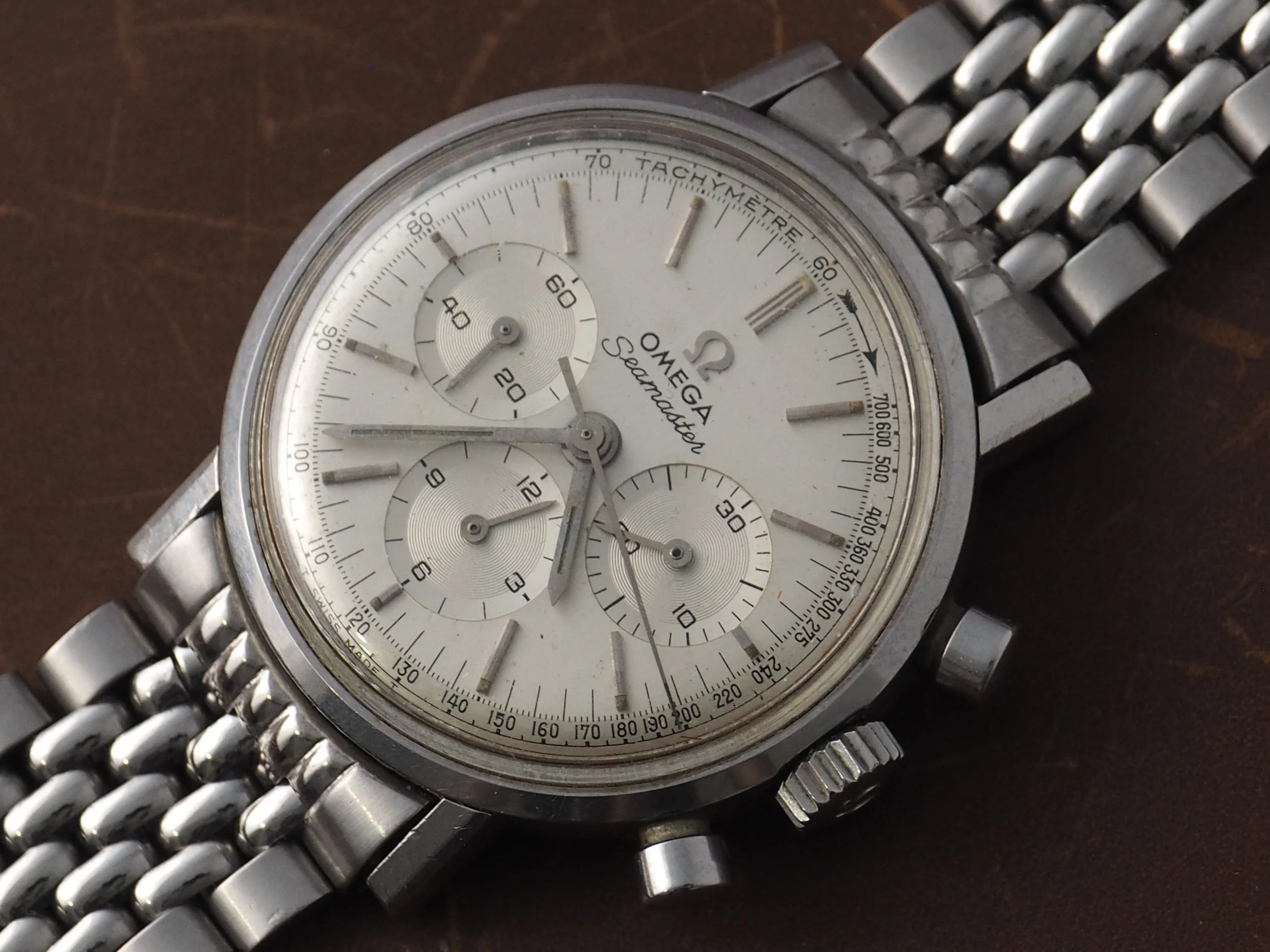 Image 1 of 10
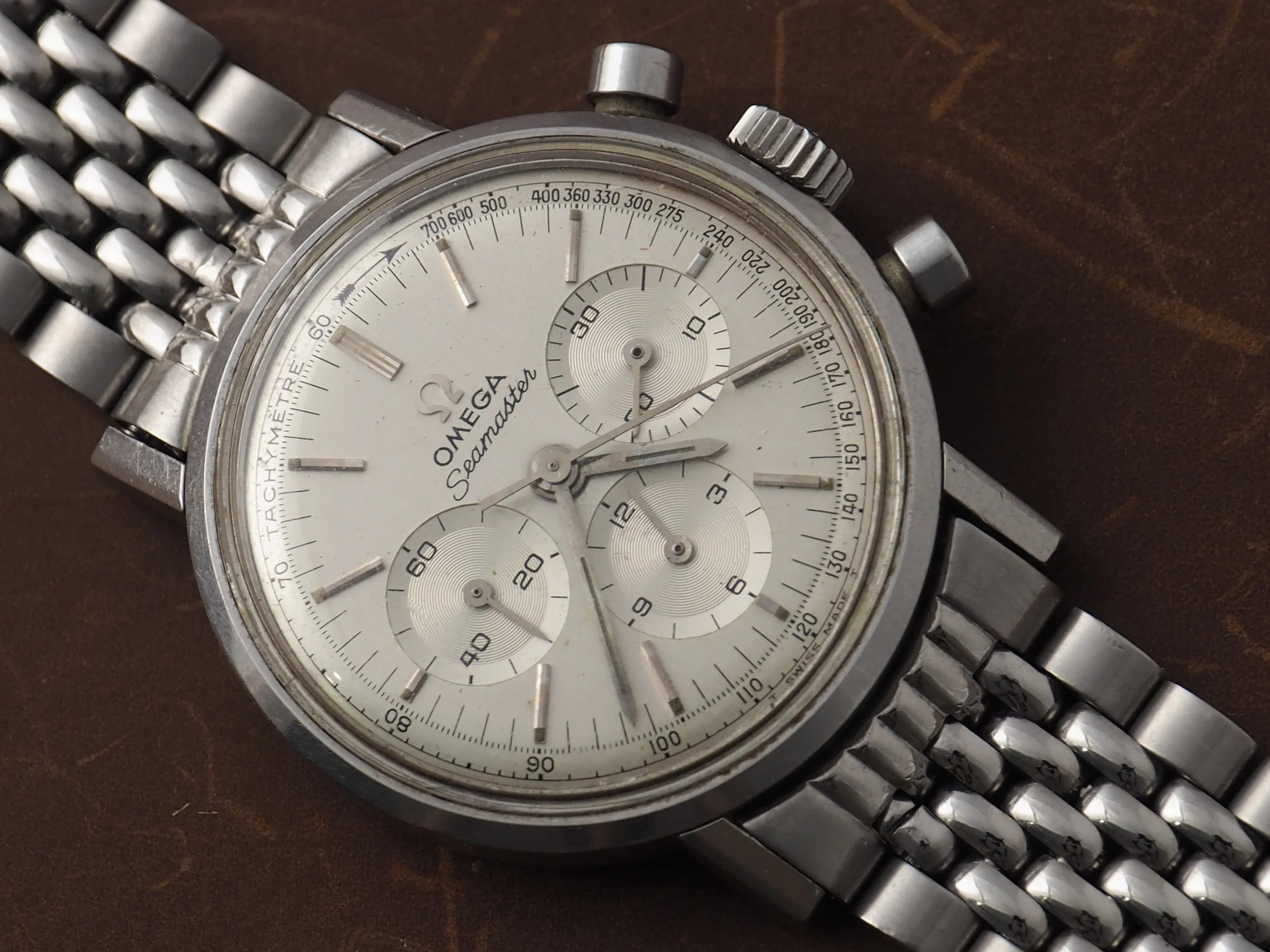 Image 2 of 10
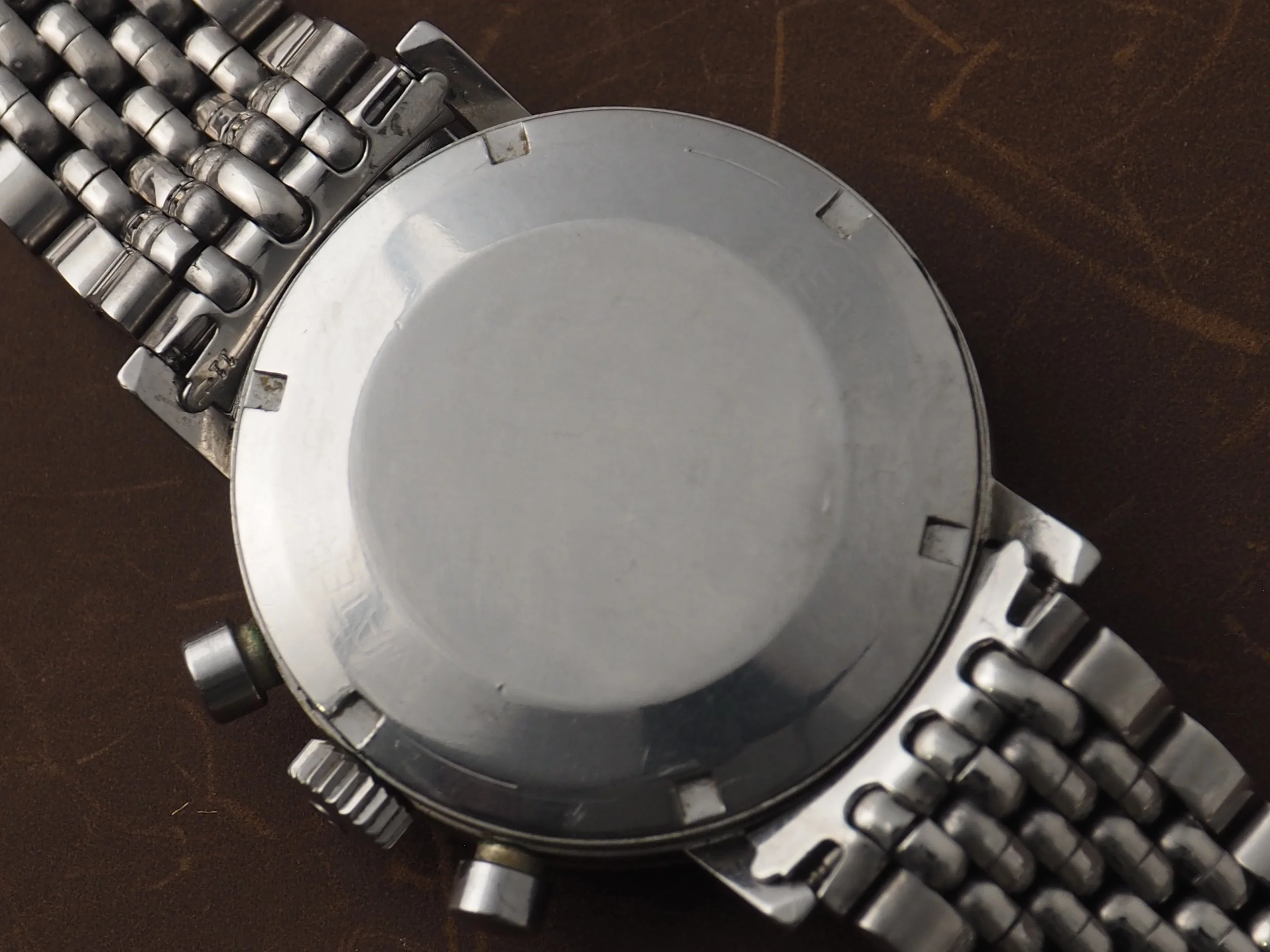 Image 3 of 10
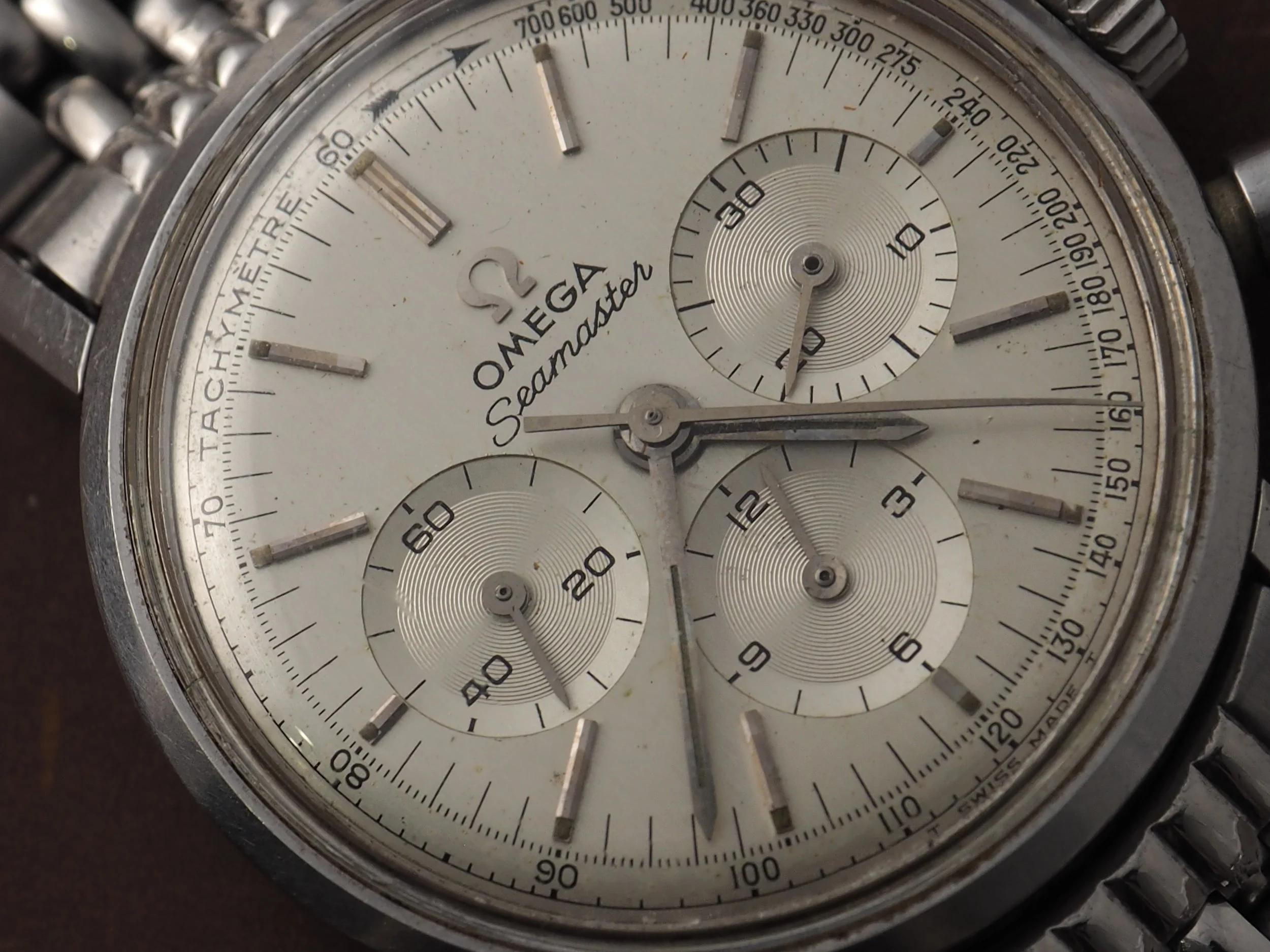 Image 4 of 10
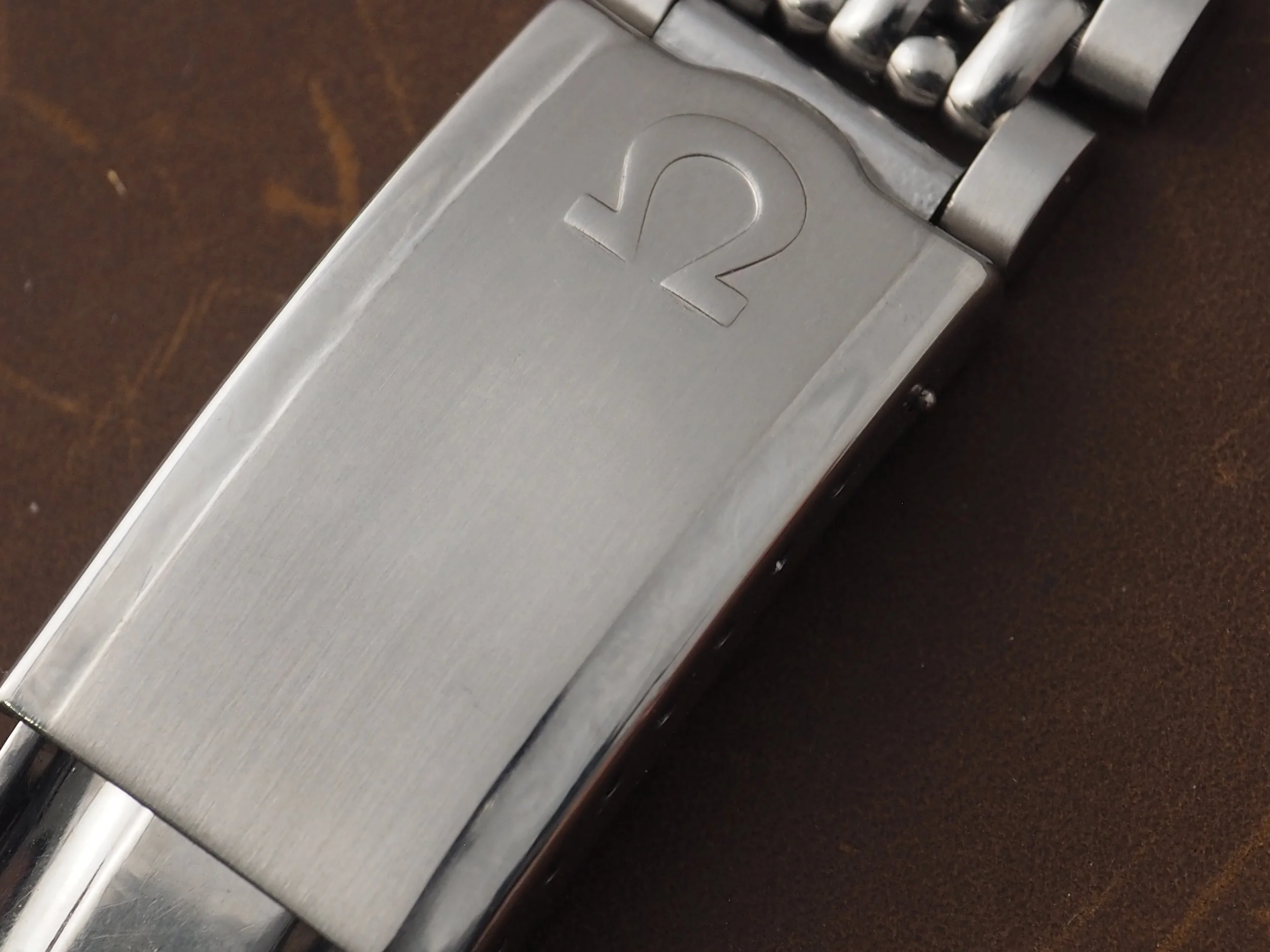 Image 5 of 10
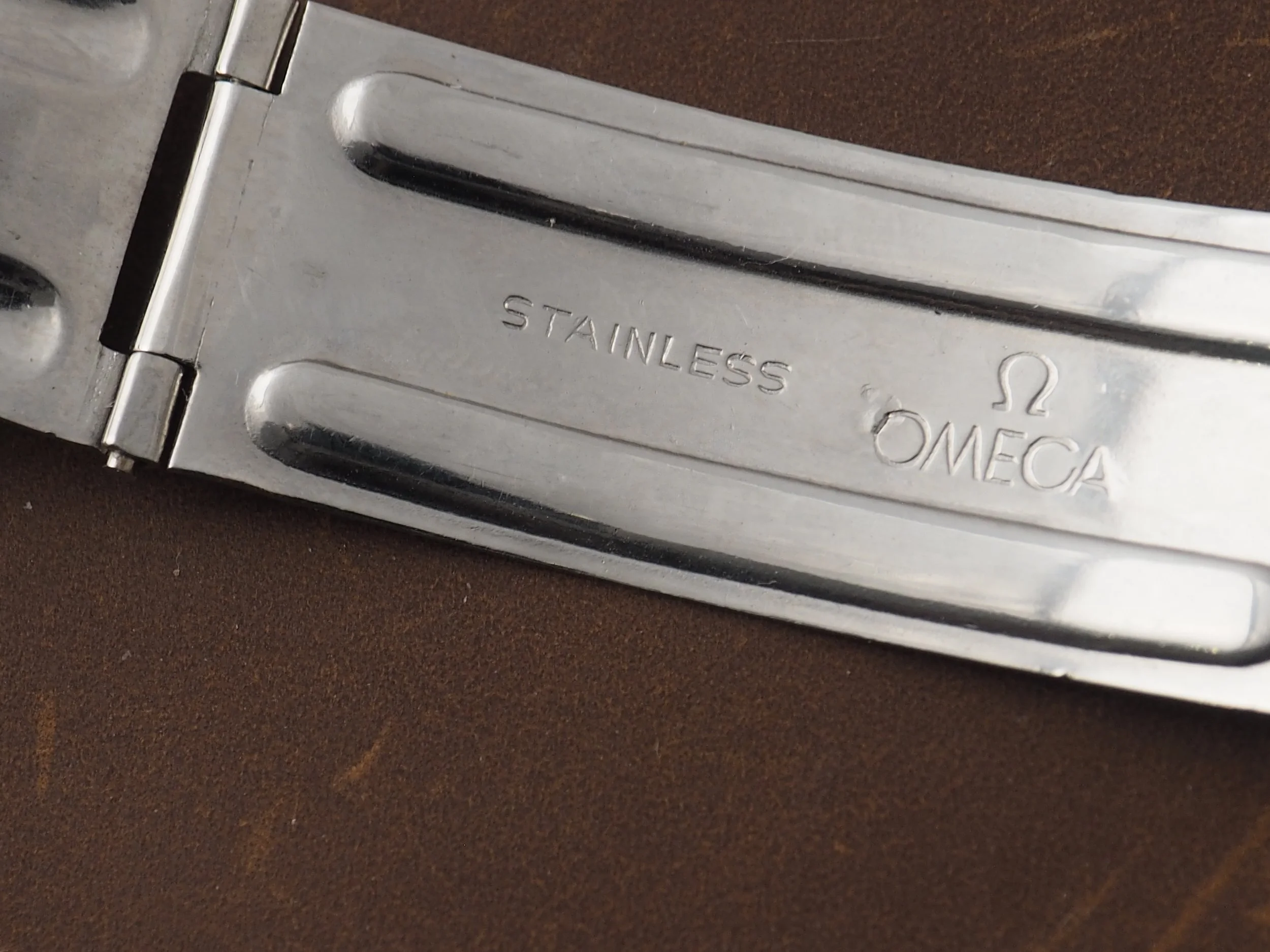 Image 6 of 10
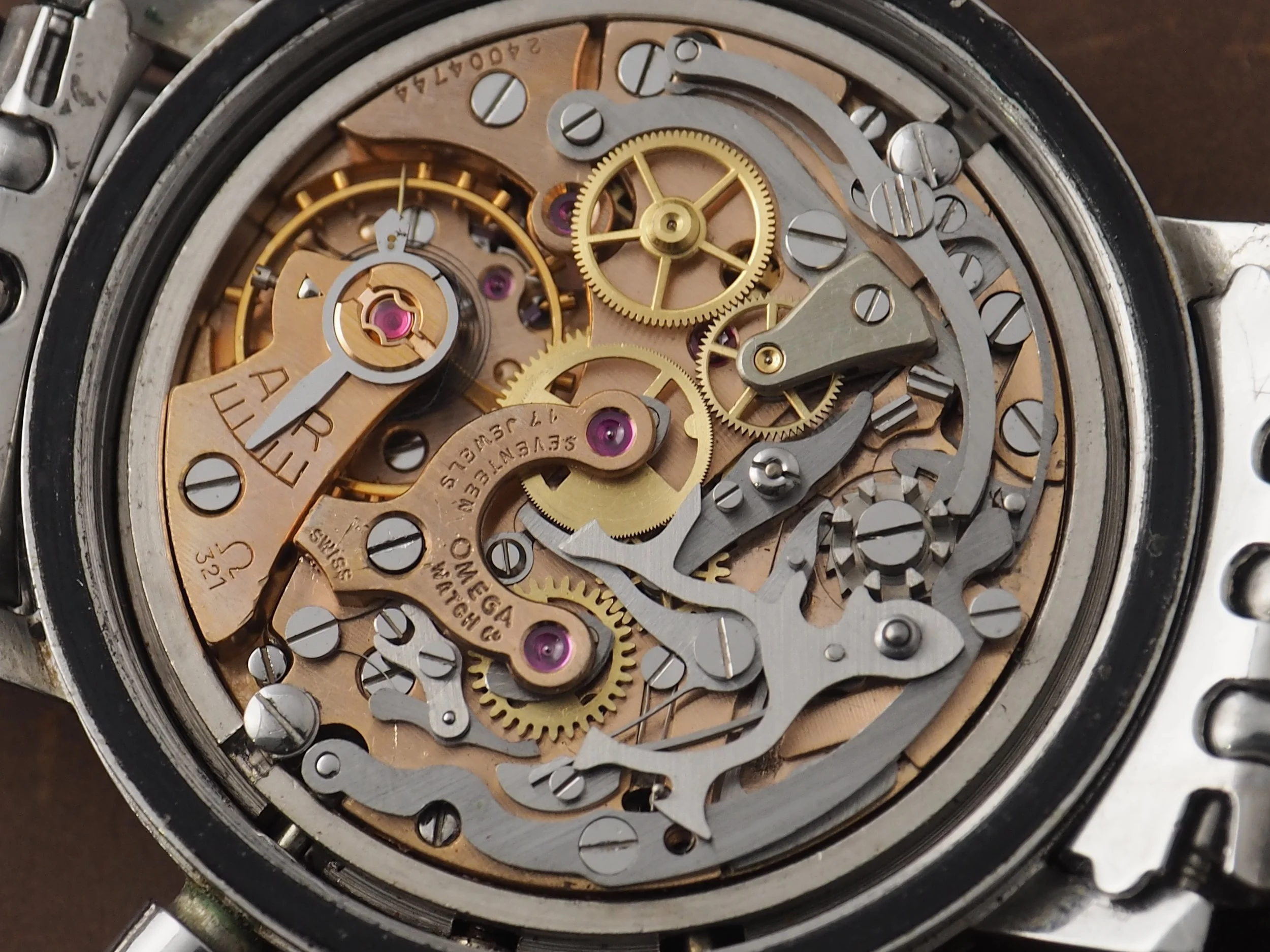 Image 7 of 10
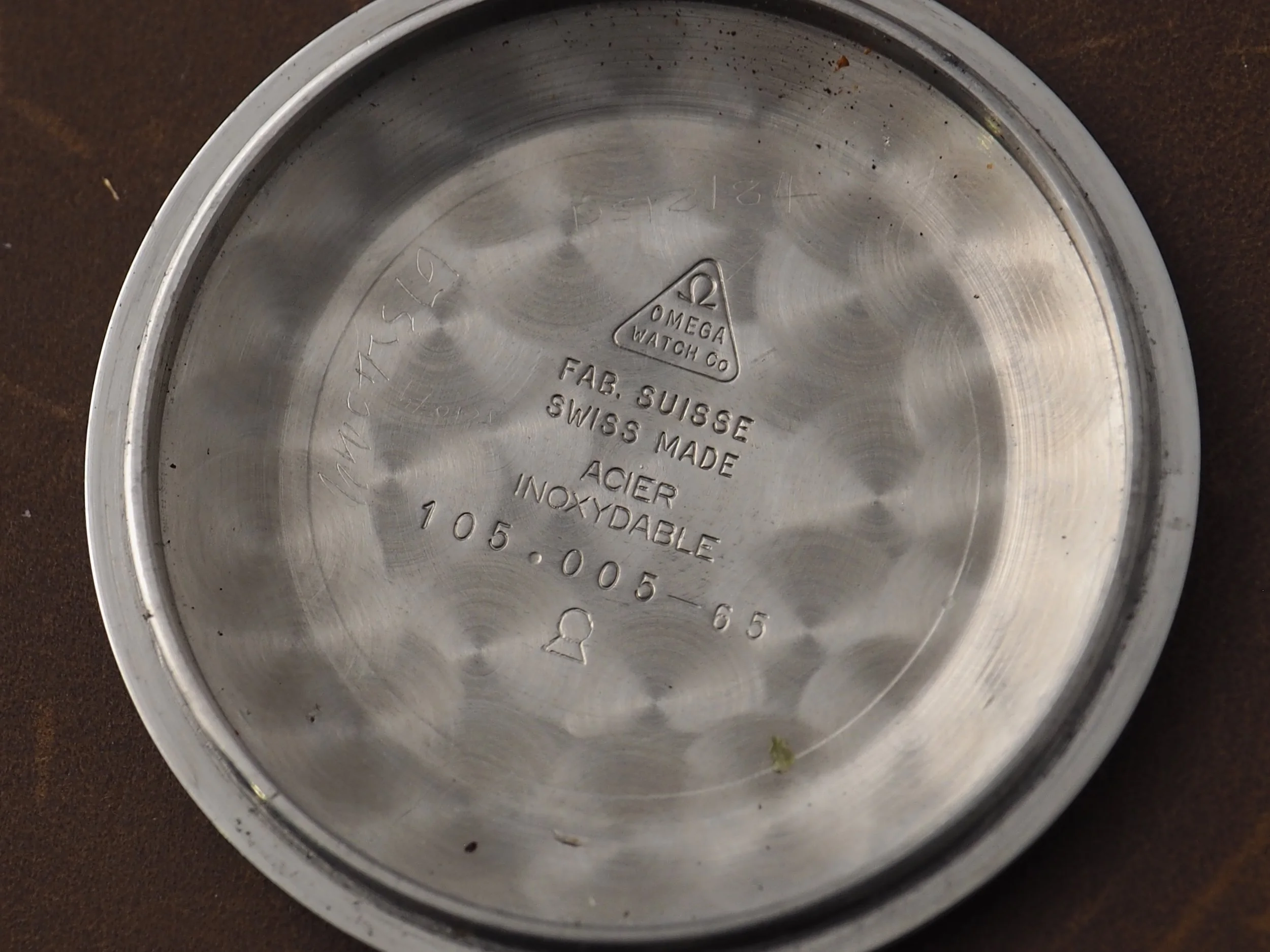 Image 8 of 10
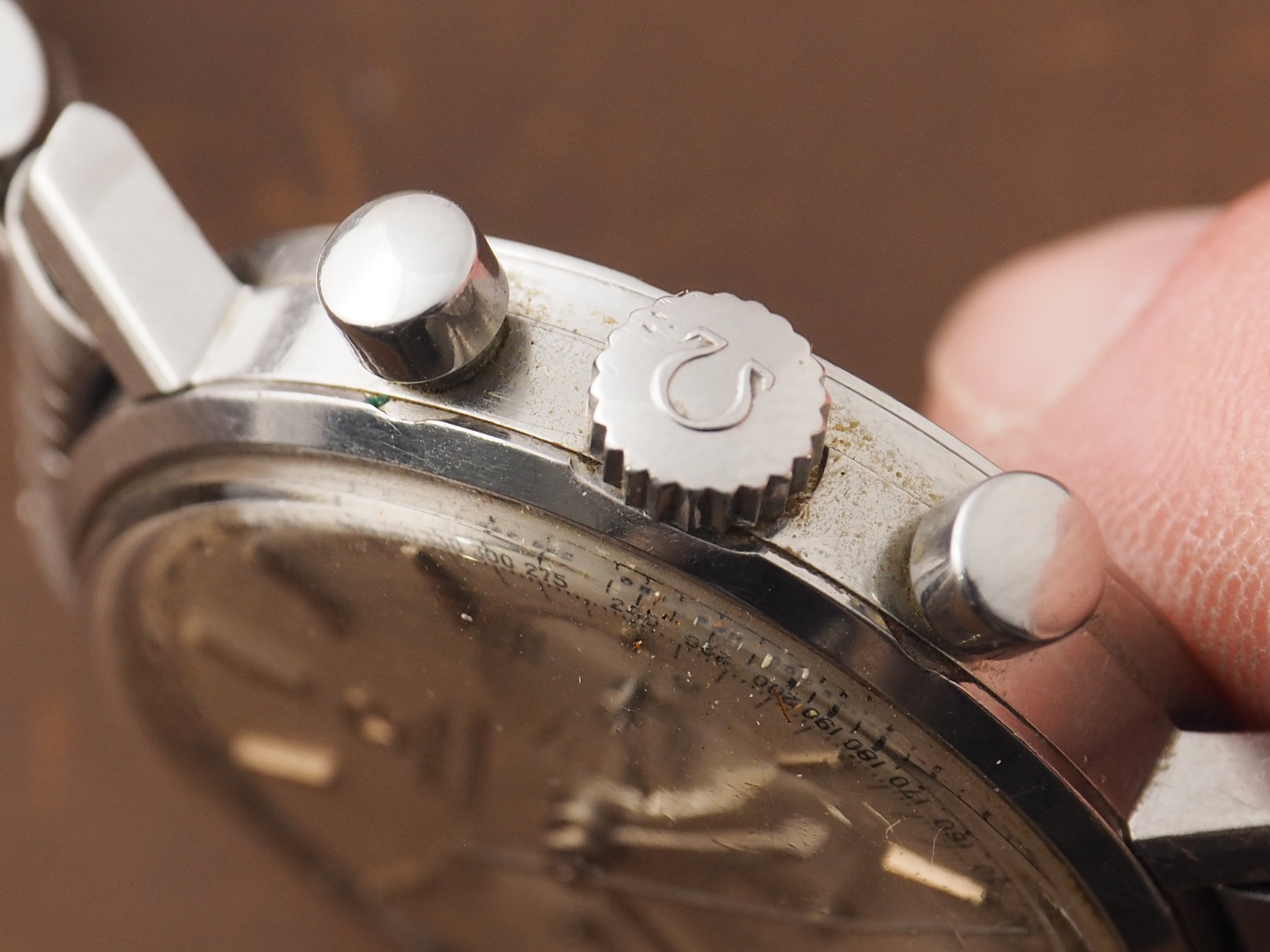 Image 9 of 10
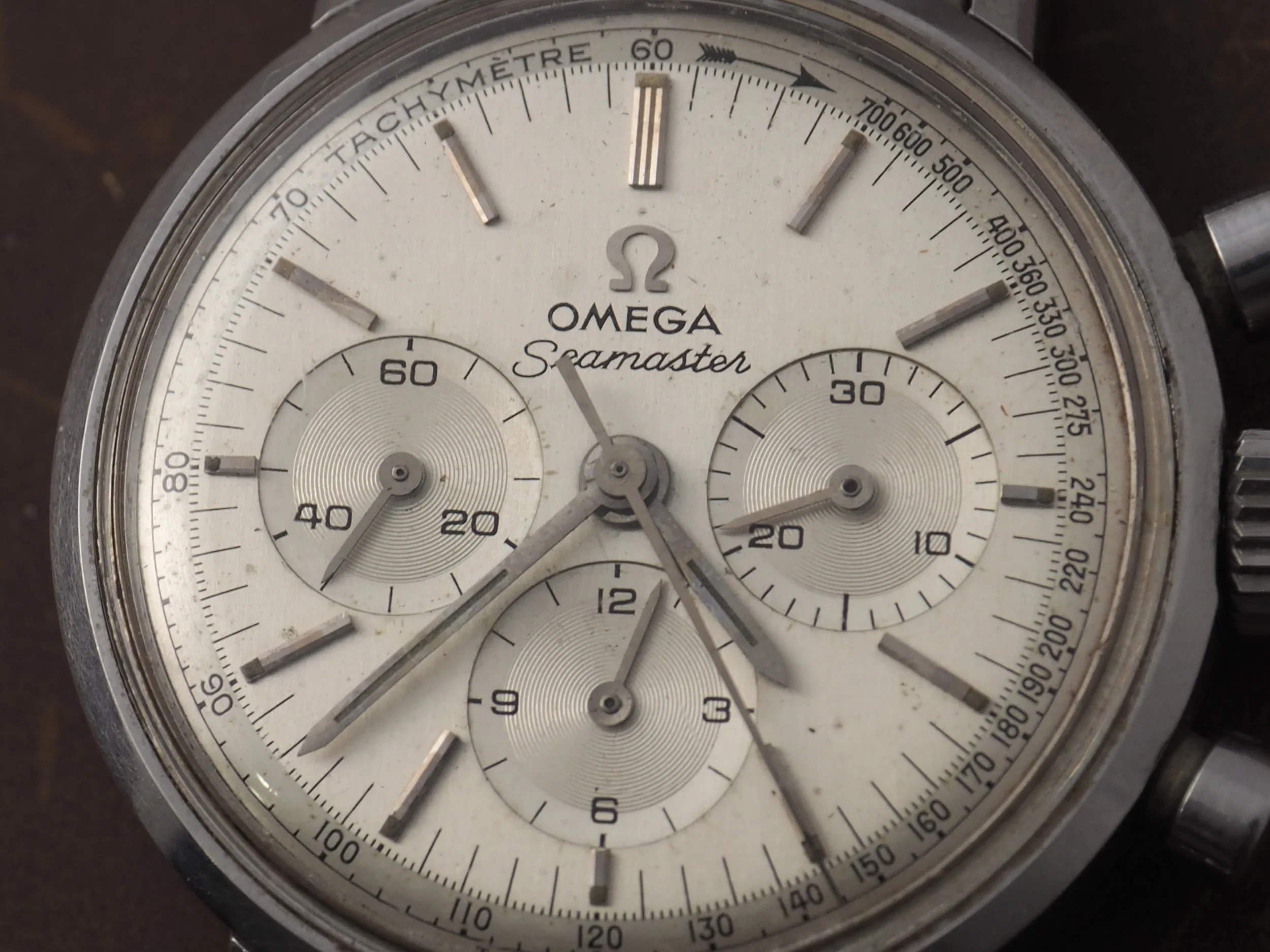 Image 10 of 10